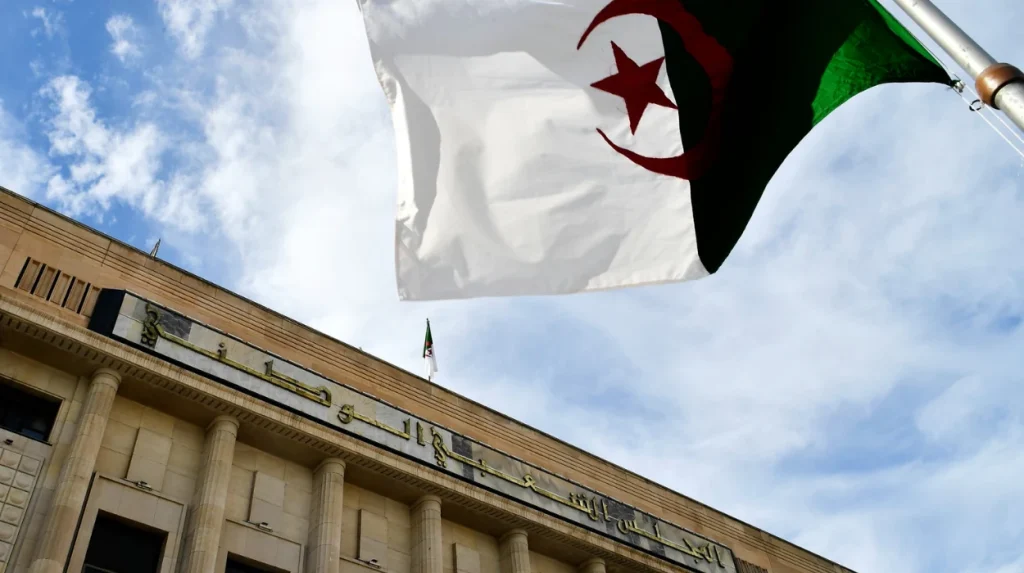
Algeria’s parliament has taken a decisive and symbolic step in its long-running struggle over historical memory by unanimously passing a law that declares France’s colonisation of Algeria a crime and formally demands an apology and reparations. The law functions without legal authority outside of Algeria, yet it creates strong political effects. The situation represents all the past tensions between Algiers and Paris while creating a fresh layer of conflict, which will intensify their deteriorating relationship.
The vote took place while legislators wore national colours and chanted “long live Algeria”, which showed more than what parliament usually does during its sessions. The Algerian state shows its effort to base its diplomatic approach on historical justice through this move during the current period of severe diplomatic disagreements between the two nations. The state has turned historical memory into a weapon because France reached its lowest point in diplomatic relations with other countries during the past few years.
A law rooted in history, aimed at the present
The legislation establishes France as the responsible party for all colonial actions in Algeria, which resulted in various harmful incidents, including nuclear experiments and unlawful killings and torture and resource theft. The Algerian people hold an unbreakable right to receive complete compensation for all physical and emotional harm that French colonial forces inflicted upon them.
The French Empire maintained control over Algeria from 1830 until 1962, when it gained independence. The Algerian War of Independence which took place from 1954 to 1962 became one of the most violent decolonisation battles which occurred during the twentieth century. The official death toll from Algeria stands at 1.5 million according to their government but French historians estimate the number of deaths at 500,000 most of whom were Algerian civilians.
Algeria chooses to establish legal frameworks for colonial crimes because it aims to build a national story which preserves historical colonial violence from being forgotten or diminished through any form of compromise. The parliamentary speaker Ibrahim Boughali stated that the vote sends two messages which establish that no one can erase or reduce Algeria’s historical legacy.
Symbolism with strategic weight
Legal experts state that international law lacks authority to force France into specific actions. Yet its symbolic power is precisely what makes it significant. Hosni Kitouni from the University of Exeter studies colonial history and he explains that this action creates a complete break with France regarding their shared historical memory. In other words, Algeria is no longer content with partial acknowledgments or carefully worded statements; it is asserting its historical narrative as a cornerstone of foreign policy.
The current transition stems from a worldwide diplomatic emergency which started to develop during the last months of 2024. The situation became more intense after French President Emmanuel Macron supported Morocco’s plan to control Western Sahara which Algeria considers a betrayal of Sahrawi independence. The diplomatic conflict between Algeria and France started when Algeria withdrew its ambassador from Paris which triggered multiple retaliatory measures that spread from Western Sahara to affect migration policies and visa regulations and security agreements and historical disagreements.
A spiral of retaliation and arrests
The situation evolved into a continuous loop of reciprocal expulsions and major law enforcement actions during the final months of 2024 and throughout 2025. The Algerian government arrested Franco-Algerian author Boualem Sansal during November 2024 because he made statements which questioned the official versions of colonial history and the independence war. The court in Algeria decided to maintain the five-year prison sentence which Paris strongly opposed during the month of June 2025.
France has taken action by detaining Algerian citizens who include social media personalities accused of promoting violence. The two countries have linked their collaboration on migration and visa matters to the return of deported migrants, according to the 1968 Evian Accords. The two countries have linked their collaboration on migration and visa matters to the return of deported migrants, according to the 1968 Evian Accords. The two nations established a connection between their migration and visa cooperation through the mandatory deportation of rejected migrants as specified in the
The most intense episode unfolded when French authorities charged three Algerians, including a consular official, with kidnapping Amir Boukhors in Paris. Amir Boukhors became known as Amir DZ through his online presence as an Algerian critic who faced exile. The case France presented against Algeria stemmed from its belief that Algerian intelligence sought to suppress overseas opposition. This led to an unprecedented diplomatic standoff between the two nations. The Algerian government rejected all allegations because they believed France sought to block reconciliation efforts between the two nations.
Colonial memory as a live diplomatic fault line
The immediate disagreements stem from a complex network of unaddressed historical disputes which continue to influence the situation. The Algerian Sahara received French nuclear testing during the 1960s which created lasting environmental damage and health problems that continue to provoke public outrage. The “harkis” who served with French forces during Algerian independence face ongoing debates about national accountability and military desertion. The ongoing process of decolonization receives support from three main areas, which include colonial archive access, cultural artifact restitution, and Algerian visa policies.
France has taken limited steps toward recognition. Macron has described colonisation as a “crime against humanity” and acknowledged specific atrocities, but he has consistently stopped short of issuing a formal apology or endorsing reparations. Algeria has reached a stage where its current position in the international system does not fulfill its requirements. The new law establishes a clear boundary which demonstrates that reconciliation remains impossible. Until all parties fully admit their wrongdoing and accept complete responsibility.
The darker legacy of colonisation
The Algerian government bases its focus on colonial crimes because of historical facts which have been thoroughly proven. During the nineteenth century conquest period French forces used scorched-earth policies together with mass executions, and collective punishment to defeat resistance movements. The 1845 Dahra Cave massacre became a symbol of this brutality because it resulted in the death of more than 800 Ouled Riah tribe members who were suffocated and burned alive.
In the twentieth century, repression intensified. The 1945 Sétif and Guelma massacres, carried out in response to pro-independence demonstrations, killed thousands—possibly tens of thousands—of Algerians. The French military used torture and internment camps, and forced displacement, and aerial bombing during the war of independence. French archives and former officer statements later confirmed.
For Algerians, these events are not distant history. They form the foundation of national identity and state legitimacy, making any perceived minimisation by France politically unacceptable.