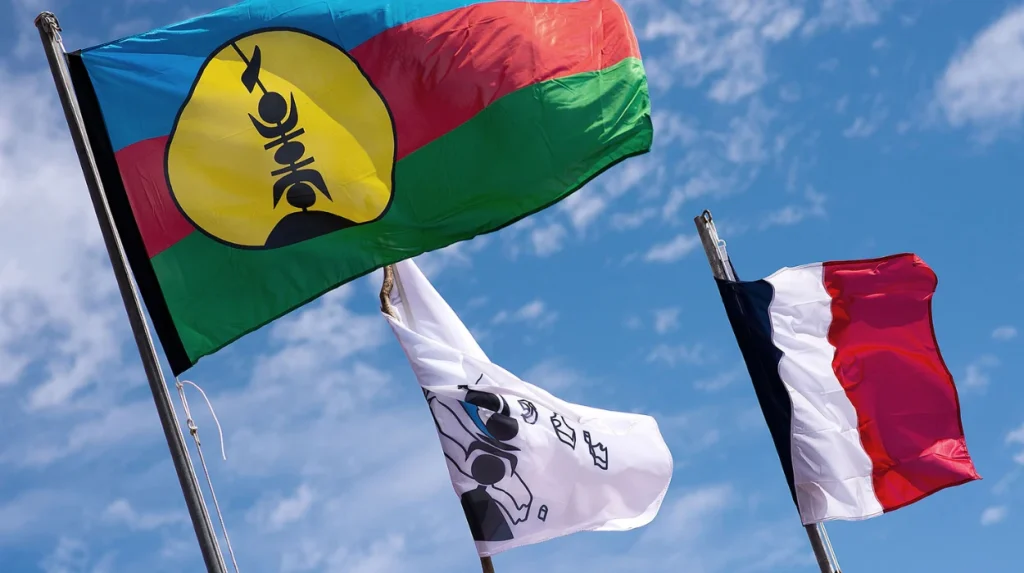
A new stage in the prolonged confrontation between sovereignty and identity of New Caledonia is presented by the new constitutional status which was announced in July 2025. Three referendums later and a few decades of unrest have led to a compromise: the French government and New Caledonian leaders have agreed on a two-in-one model: New Caledonia will be a part of the French Republic as a state within a state, i.e “State of New Caledonia”. The construct provides dual citizenship, both French and Caledonian, and gives new authorities to the local government keeping the main sovereign powers to France.
The deal arrives after the deadly riots of May 2024, which were the worst unrest in the land in decades. It wants to set aside the stagnation of the past and reorient the autonomy debate on a constitutional level, which attempts to strike a balance between indigenous self-determination and national unity. The compromise is, however, not complete. To it belong political doubts, require careful application, and allow the possibility of a renewed conflict in case of failure to meet expectations.
A history of tension informs the present
Kanak independence movement and colonial legacy
The native Kanak people have traditionally been at the pinnacle of the independence struggle. The Kanak community experienced systemic marginalization since France assumed power in 1853, particularly in the 20 th century, where an influx of European and Polynesian settlers shifted demographic ground. The struggle culminated in a wave of resistance in the 1980s, which reached crisis point in the 1988 OuvEa cave hostage crisis and the Matignon Accords which followed.
Its path to self-determination was stipulated in the 1998 Noumea Accord that gave a transition roadmap. It contained an undertaking of three independence referendums, the final one of which took place in 2021. Although all of the three votes opposed full independence, the third one was boycotted by the pro-independence camp which casts a doubt on its legitimacy..
The 2024 riots and the electoral question
The 2024 violence was precipitated by a suggested alteration of the local voting rights. Loyalist camp favored enlargement of the voters list with non-indigenous long term residents, which the Kanak leadership perceived as a demographic coup. The response was in the form of riots claiming 14 lives and damage to the facilities the government provided, such as the port of Noumea and several economic facilities.
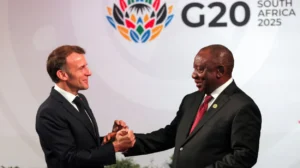
It was this violence that forced Paris to return to negotiations. President Emmanuel Macron called the situation “a moment of rupture and risk,” but insisted on framing the new agreement as a “new beginning for the Republic in the Pacific.”
Key components of the new compromise
A dual nationality: legal innovation or symbolic gesture?
New Caledonia’s economy is heavily dependent on its nickel reserves, accounting for nearly 90% of exports. The instability in global prices and reducing demand has destabilized the revenues of the governments. In 2024, the riots put mining on hold for several weeks, translating to huge amounts of losses.
The deal has seen France promise new financing; with euro 1.2 billion to be invested in infrastructure and social schemes during the coming three years. However, there have been doubts as to how this money will be shared and whether it will be spread to the worst affected areas, in the rural Kanaks regions.
Institutional redesign and phased autonomy
The unemployment rate in New Caledonia is 15 percent and it is twice the level among young Kanaks. Diversification in the economy is very slow, and the uncertainty in politics has scared away foreign investment. Plans of vocational training and collaboration with neighbours of the Pacific were included in the 2025 deal, but these plans are not being implemented yet.
Unless a quick improvement is made in terms of employment, particularly with the youth, the socio-economic dissatisfactions that led to the riots in 2024 could not be addressed, thus threatening the political success of the pact.
Economic fragility in the spotlight
Nickel dependency and inequality
New Caledonia’s economy is heavily dependent on its nickel reserves, accounting for nearly 90% of exports. Global price volatility and declining demand have destabilized public revenues. In 2024, the unrest halted mining operations for weeks, causing massive financial losses.
France has promised renewed financial support as part of the deal, with €1.2 billion pledged for infrastructure and social programs over the next three years. But questions remain over how this money will be distributed and whether it will reach the most affected communities, particularly rural Kanak regions.
Diversification and youth employment
Unemployment in New Caledonia stands at 15%, with rates twice as high among young Kanaks. Economic diversification is slow, and political uncertainty has deterred foreign investment. The 2025 deal includes provisions for vocational training and partnerships with Pacific neighbors, but these initiatives are still in the planning phase.
Without urgent progress on employment, especially for youth, the underlying socio-economic grievances that fueled the 2024 riots may remain unresolved, limiting the political success of the agreement.
Political and social reactions
Divided reception among leaders
Pro-France figures, including Sonia Backès, a senior loyalist politician, have called the agreement a “responsible way forward that keeps New Caledonia in the Republic while giving it the tools to thrive.” FLNKS leaders like Roch Wamytan have spoken cautiously but cautioned that the granting of nationality should not become an issue of concealing the emancipatory agenda of decolonisation.
Each camp has no collective voice and the implementation might get complicated because of the divisions within each camp. Certain Kanak militants have accused of betrayal of historical struggle, those willing to accept less than full sovereignty. The fears on the loyalist side remain of losing French financial aid, or court protection.
Civil society and expert insights
In 2024, the dialogue was mediated by the civil society organizations, mainly the churches, and indigenous networks. They continue to play pivotal roles in having the new order accepted at grass root level.
According to legal expert Jean-Baptiste Jeangene Vilmer, interviewed by Le Monde, the deal was “a legal hybrid, unprecedented in French law,” and that the deal will be as durable as it will be founded not on text but on trust. That trust is weak in a land where colonial gashes are still open.
Unresolved risks and looming decisions
Referendum in 2026: a fragile test
The second huge step will be the referendum in February 2026 in which New Caledonians are set to accept or reject the constitutional restructure. The amendments also have to be ratified by the Parliament in France and this is expected to bring up some political discussion on the boundary of decentralization in Paris.
It is not ensured that the referendum will be successful. There would be a threat of boycott by pro-independence groups threatening legitimacy. A thin approval can also extend the stage of instability, particularly in the event that implementation is slackened or regarded in court.
The sovereignty debate is not over
This agreement places France in charge of the key sovereign processes and it expressly bars the prospect of full independence in the foreseeable future. This makes loyalists and the state of France feel reassured but this could just postpone the end of the reckoning concerning sovereignty. Kanak self-determination is a long and very deep struggle within the ranks of the people.
The agreement may be differently interpreted in the future government in Paris or the economic crisis may revive the demands of complete separation. There is a lack of a provision used in the future independence referendum and this is the only ambiguity left unsolved in the current architecture.
Beyond France and New Caledonia
Through the 2025 deal, there are national and foreign repercussions. It is part of the larger French strategy in the Pacific as geopolitical tensions between China, Australia and the United States rise. Maintaining New Caledonia stability is included in the strategy to promote the French presence in the Indo-Pacific as it has been repeated by Macron.
Pacific neighbors have been eying the deal cautiously with some of them applauding it. The Melanesian Spearhead Group which supports Kanak independence has not made any formal declaration but is likely to take up the matter at its next summit.
This shifting greatly might turn into an example, or a lesson, to other post-colonial territories establishing identity, autonomy and legal improvisation. The world will watch to see if France will manage to provide a genuinely democratic move towards post-colonialism, or whether this will be a case of a framework under strain by historical resentment and post-modern complexity.
With the 2026 referendum ticking closer to us, the stakes have never been higher. The future is unlikely predestined in the respect of constitutional architecture but rather what best New Caledonia can do to ensure that compromise becomes cohesion and ambiguity a goal.