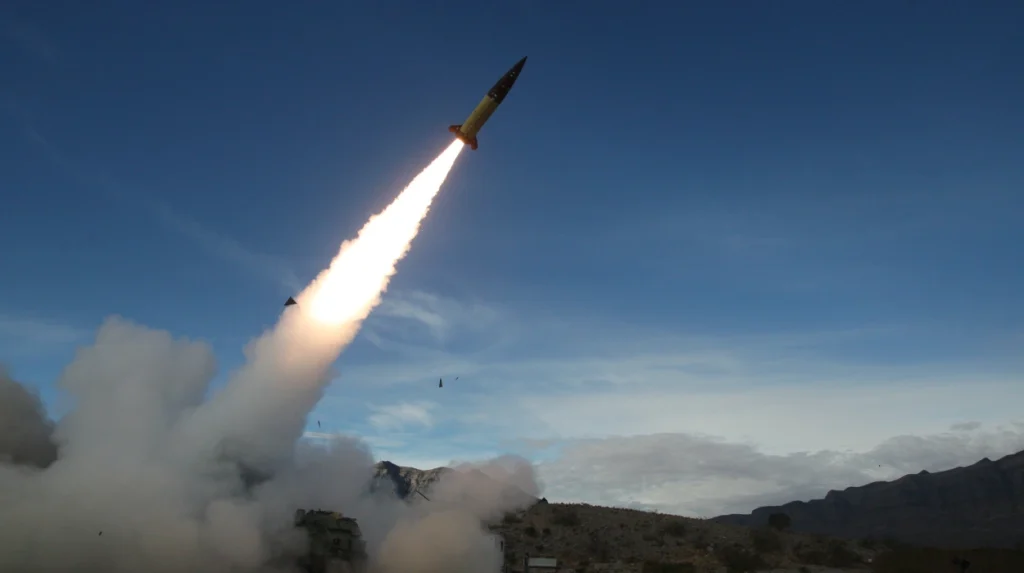
On July 16, 2025, President Donald Trump made another significant policy shift by giving the green light to the deliveries of U.S. made long-range missiles to Ukraine. These weapons that are able to launch an attack deep into Russian territory as well as Moscow indicate the most significant change in US army support that can be made since the start of the war. Having flinched in this area through years of post-Truman hesitation, this step represents an accession to a more aggressive American posture, as well as begs the questions of what happens next in a war and what is the reach of expansion and whether the liaisons of the globe are unbreakable.
Trump’s Evolving Policy: From Restraint to Engagement
Early reluctance and strategic ambiguity
In recent years, Trump has continued the policy of strategic ambiguity with Ukraine, although it changed a little after the president came back to office. In early years, his administration restricted the U.S. assistance to short-range defense systems and was able to avoid offensive weapons that would lead to a confrontation with Moscow. The policy was partly political and strategic: Trump did not want to get the U.S. involved in another quagmire and openly confront Russia with little or no provocation.
This eventually changed the math at the white house though, as Russia prolonged its missile strikes on Ukrainian cities into spring and early summer 2025. Civilian casualties and destruction of infrastructure were recorded in Kharkiv, Dnipro and Mykolaiv reports. It was the cost of the war (not to mention the fact that Putin was viewed to be taking advantage of western restraint) that brought Washington to change its mind.
The July announcement and new NATO dynamics
The announcement by Trump on July 14 with the secretary general of NATO Mark Rutte by his side was not only a manoeuvre by him on a tactical level but also on a level that involved reconsideration of the roles of the alliances. The U.S. will provide a long range including advanced precision munitions but the finance will be paid by European members of NATO. This burden-sharing formula, proposed earlier by Ukraine at the NATO summit in Warsaw, reflects Trump’s ongoing demand for greater European responsibility within the alliance.
Rutte underscored this in a joint statement:
“This is about joint responsibility, deterrence, and providing Ukraine with the tools to survive and negotiate from strength.”
Strategic Implications and Battlefield Impact
A new phase of Ukrainian capabilities
The inclusion of long-range missile systems alters the balance of power. These weapons can target Russian supply hubs, air bases, and command centers far from the front lines. Ukrainian forces, bolstered by new domestic missile technologies, have long argued for such capabilities. With this shift, Kyiv gains not only new firepower but increased leverage in future negotiations.
More critically, Ukraine’s integration of U.S. long-range systems with its growing indigenous drone fleet—backed by over $4 billion in government investment this year—enhances its strategic depth. Russia can no longer count on distance as protection for critical military assets.
Russia’s likely response and calculated risks
Russia has already declared that any long-range attack on its soil will be considered a major escalation. In recent months, Moscow has moved hypersonic weapons closer to the Ukrainian border and increased air defense systems near strategic locations. Analysts within the Russian Defense Ministry warn that retaliatory strikes on NATO logistical points “are not off the table.”
The Kremlin’s ambiguity leaves NATO with difficult decisions. If Ukraine does use U.S. weapons inside Russia, Moscow’s response could target Western assets indirectly—in Moldova, Georgia, or even cyberattacks against NATO members. This is the tightrope the U.S. and Europe now walk: empowering Ukraine while containing spillover.
Political and Diplomatic Reverberations
Internal reactions in the United States
The shift has sharply divided U.S. lawmakers. While Republican Senator Lindsey Graham hailed it as a “necessary evolution of deterrence,” isolationist factions within both major parties question the move’s sustainability. Some House members warn of potential “mission creep,” while progressive voices argue the money would be better spent domestically.
Despite these concerns, polling data from early July indicates 61% of Americans support military aid to Ukraine if it reduces the chances of direct U.S. involvement. Trump’s team seems to be relying on this sentiment, coupled with European financial backing, to justify the pivot.
European responses and NATO recalibration
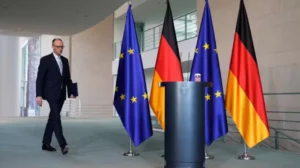
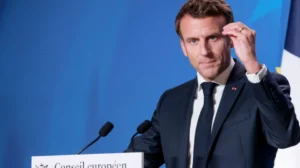
In Berlin, Paris, and Warsaw, the announcement was met with guarded optimism. European leaders have been urging a firmer U.S. role, and this arrangement allows them to participate without logistical strain. German Chancellor Annalena Baerbock stated that
“Ukraine must not be abandoned to face a nuclear-armed aggressor alone.”
Still, some European defense analysts caution that the arrangement sets a precedent—Europe pays, America arms—which could blur accountability and further militarize the conflict.
The Broader Geopolitical Chessboard
Repercussions for U.S.-Russia relations
Trump’s approval of these weapons effectively shuts down the already minimal diplomatic channels with Moscow. In early July, a direct phone call between Trump and Putin reportedly ended in frustration. Trump described the exchange as “a total waste of time,” accusing Putin of “doubling down on destruction.”
That frustration may explain the sudden turn in U.S. posture. In tandem with the missile announcement, Trump issued a 50-day ultimatum: Russia must begin credible peace talks or face “devastating tariffs and complete economic isolation.” This dual-pronged pressure—military and economic—is a hallmark of Trump’s strategy. Whether it forces concessions or hardens resolve remains uncertain.
A hybrid war and the role of innovation
Ukraine’s war is increasingly hybrid: conventional military operations now intersect with AI-enabled drones, cyber defense, and satellite surveillance. The introduction of U.S. long-range systems accelerates this hybridization. Analysts suggest that lessons from Ukraine will likely shape NATO doctrines for decades.
Curiously, this action can also affect the situation with defence expenditure in Asia. Japan and South Korea are already revisiting their missile defense policies and Ukraine is already considered as a live laboratory of deterrence and survival.
Media Commentary and Public Discourse
This individual has discussed the subject and pointed out that the policy change is a result of the twofold frustration with Russia remaining intransigent as well as awareness of the changing requirements of the battlefield by Ukraine. The analyst warned that although such a step reinforces the position of Kyiv, it has to be handled with caution to prevent escalation and keep the allies together.
U.S President Donald J Trump to unveil an "aggressive" plan today (Jul 14, 2025) to arm Ukraine with long-range missiles targeting Moscow, amid Pentagon stockpile concerns.
— Sarina Dion (@iamsarina_dion) July 14, 2025
Senator Graham pushes sanctions to pressure Russia. pic.twitter.com/7edogJO4up
A Precarious Advance into the Unknown
Trump is not crossing the long-range missile threshold in Ukraine as a tactical decision by any means, this is a political decision, a diplomatic message, and a military escalation all in one. It indicates increasing frustration with failing diplomatic efforts and the notion that pressure has to be applied first and then peace may come. The future however is full of uncertainties.
What will be the response made by the Kremlin in case Ukraine launches these missiles within Russian territory? Will European unity pass a test? Is Trump capable of retaining bipartisanship to a point that he will be able to see the strategy through to completion? Such unresolved questions will define the course of the war as well as the premises of global security after 2025.