Portugal has formally enacted a nationwide ban on face coverings in public spaces, a move that places Lisbon alongside a growing list of European capitals restricting full‑face veils. President António José Seguro signed the measure on 19 August 2026, promulgating legislation widely dubbed the “burqa law” in Portuguese media. The law bans any attire or equipment that is meant to conceal the wearer’s face or make the wearer unidentifiable in public places. Furthermore, it criminalises compelling someone to hide his/her face on grounds of religion, gender, age, or ethnic origin. Although justified by its supporters as being a law on security and integration, there is a fear among many that it could further discriminate against Muslim women.
The Law’s Core Provisions and Penalties
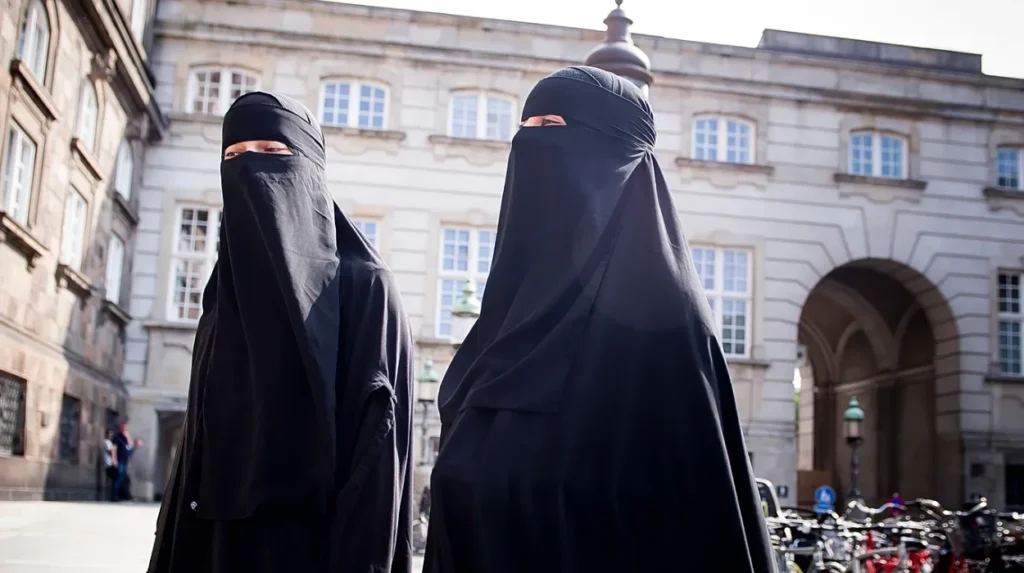
Fundamentally, it makes wearing clothes or any device which conceals the face and prevents identification unlawful in the public domain. In this respect, the draft avoids any kind of explicit or even indirect reference to any particular religion or garment; however, there is no doubt as to the target objects of the law – burqas and niqabs. In addition to the prohibition of wearing burqas and niqabs in the public place, it is also prohibited to compel a person to conceal his or her face in order to protect him or her from any kind of harm associated with his or her gender, religion, age, or origin.
The fine for those who violate the new law depends on the intention and varies from €150 to €3,000. The initial bill included up to three years in jail for the offenders, but it was decided that there should be no penalty other than fines. Moreover, offenders will not receive criminal punishment. The legislation provides for several exemptions for health reasons (such as a medical mask), professional, artistic or weather-related purposes, and some specific locations (for instance, places of worship, diplomatic missions and airplanes).
Legislative Journey and Political Backing
The path to enactment began in October 2025, when Portugal’s parliament approved a first draft introduced by the far‑right populist party Chega, explicitly targeting burqas and niqabs in most public places. The proposal quickly became a flashpoint in national debate, pitting security and integration arguments against concerns over religious freedom and minority rights. On 17 July 2026, the final bill was passed by a two‑thirds majority in parliament, backed by Chega and the centre‑right governing coalition, including the Social Democratic Party (PSD), while left‑wing parties opposed it.
The President of the country, António José Seguro, signed the bill into law on 19 August 2026 after months of discussions and reviews. In this regard, he found himself siding with the views of the government even when there were calls for him to veto it or to consider the issue under constitutional issues from human rights groups and the opposition in the government. The party leader Andre Ventura had previously said that the objective of this law was to ensure that “women should not walk around in burqas in Portugal,” but the actual wording of this legislation covered all face covers citing security and public order reasons.
Government Rationale: Security, Equality and Social Trust
President Seguro framed the measure as addressing an issue of “great social and cultural sensitivity” and justified it on several grounds, weaving together security, gender equality and social cohesion. He argued that allowing only women to hide their entire faces creates an
“asymmetry incompatible with the values of parity and equal dignity between men and women”,
positioning the ban as a step toward gender equality. This argument echoes those made in France and Belgium, where full‑face veils are portrayed not only as security risks but as symbols of female subordination.
In terms of security and identification, Seguro invoked the doctrine of the European Court of Human Rights (ECHR), arguing that the “uncovered face is a structuring dimension of social trust,” and an important component of mutual recognition in society. He emphasized the need for individuals to live their identity and convictions “in a system of common rules,” which makes shared life possible, suggesting that covering one’s face undermines fundamental requirements of social intercourse. By basing his arguments on ECHR jurisprudence, the President tried to ward off any judicial action against his policy, and show that Portugal complies with European norms.
Human Rights and Civil Society Pushback
The law has drawn sharp criticism from rights groups and left‑wing politicians, who warn it could exacerbate marginalisation and fuel Islamophobia. Amnesty International Portugal called the law “discriminatory” and a “threat to human rights”, warning it could increase exclusion, social isolation and barriers to education, employment and public services for Muslim women who choose to wear full‑face veils. João Godinho Martins, executive director of Amnesty International Portugal, argued that the ban risks pushing these women further out of public life rather than integrating them.
The Human Rights Research Centre (HRRC) expressed concern that the ban may disproportionately affect Muslim women and restrict freedoms of religion, expression and personal autonomy, urging authorities to ensure measures are
“necessary, appropriate and compatible with Portugal’s constitutional and international obligations”.
Left-wing political organizations and legal entities have argued that this law might promote discrimination and islamophobia because, despite all efforts to avoid specifying any particular religion or dress, the final version of this bill still may be seen as such. This is because the similar measures implemented by other European countries have been contested as going against the freedom of thought and expression guaranteed in the ECHR Articles 9 and 10.
European Context and Comparative Trends
With this law, Portugal joins a growing list of European countries with full or partial bans on full‑face veils in public, including France, Belgium, Austria, Denmark, Bulgaria, Switzerland and the Netherlands.
The vast majority of such laws claim neutrality in terms of security or integration, but are clearly intended to prohibit Islamic burqas and niqabs. France’s ban from 2010, which was affirmed in 2014 by the ECHR, was the first case of this kind setting an example for other countries to follow by providing similar justifications, such as public order, gender equality, and social cohesion. In the case of Portugal, one should note that this country tends to be more liberal towards religious clothing than some of its western European neighbors.
However, using a wide-ranging, religion-neutral wording, Lisbon is following the mainstream European practice and trying to protect the law from allegations of overt religious discrimination. However, the rhetoric of political parties that support the law, including Chega, shows that the symbolic object of prohibition will be the same Islamic full-face veil.
Practical Implications and Enforcement Challenges
In practice, the law primarily impacts the small number of Muslim women in Portugal who wear niqabs or burqas, though it formally applies to any face‑concealing garment in public. Police can already request removal of face coverings for identification under existing rules; the new law extends this to a general prohibition with standardized fines, giving officers clearer authority to intervene. Enforcement will likely focus on visible public spaces such as streets, parks, public transport and government buildings, where identification is most frequently required.parsi.
However, practical challenges remain. Distinguishing between prohibited face coverings and permitted items such as medical masks, scarves for weather protection or artistic costumes may not always be straightforward, potentially leading to inconsistent application and accusations of bias. Rights groups warn that even if the law is neutrally worded, its enforcement could disproportionately target Muslim women, especially in contexts where police discretion is wide and oversight limited. The risk is that the ban, intended to promote integration, could instead deepen mistrust between Muslim communities and state authorities, particularly if enforcement is perceived as heavy‑handed or discriminatory.parsi.
Looking Ahead: Legal Challenges and Social Impact
With the existing level of human rights criticism and ECHR’s case law on such bans, there is still room for constitutional or even international legal challenge. Still, the President relied on ECHR case law to support his decision. Opponents can claim that a proportionality of the law’s effect on a small and specific group of women, even despite its neutral formulation, means that a more limited intervention would be sufficient for ensuring security and promoting integration. The results of such future cases will depend on balancing of security and equality arguments with freedom of religion and individual autonomy concerns by Portuguese courts and possibly even the ECHR.
On the social rather than legal level, the consequences of the new law will have to play out in schools, offices, streets and other public places around Portugal. If the result of the law’s implementation turns out to be a decrease in the number of covered Muslim women in public places, the proponents of the new legislation will consider their goal of integration and equal treatment reached. But, in case if the opposite occurs – when the veil-wearing women will become even more isolated or Muslim communities will react negatively to the new law – the opponents of the law will consider it an evidence that Portugal gave up its pluralism in exchange for some purely symbolic manifestation of its secularity.