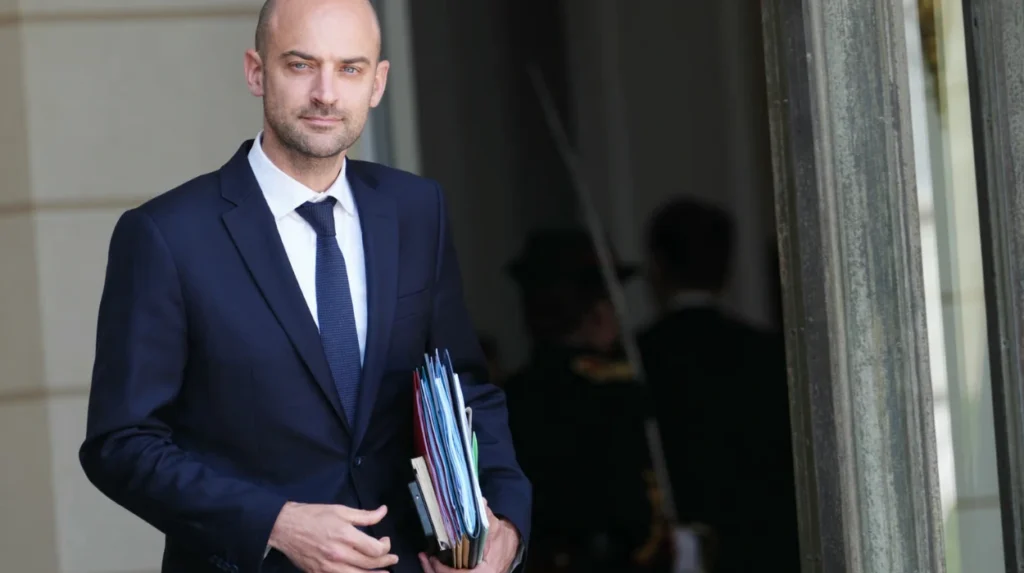
The decision by France to expel two Iranian diplomats marks a significant escalation in what has rapidly become one of the most contentious diplomatic rows between Paris and Tehran in recent years. Foreign Minister Jean‑Noël Barrot’s announcement on Tuesday evening was not merely a procedural notification; it was a carefully calibrated signal that France would no longer tolerate what it describes as deliberate violations of diplomatic norms on its soil or against its representatives abroad.
“I had announced that this intolerable act would have consequences. And so it has. Two Iranian diplomats in France will be expelled in the very near future,”
Barrot stated in a post on X, framing the move as the direct fulfillment of a prior warning.
Le peuple iranien, un grand peuple, est la principale victime de cette période d’extrême tension au Moyen-Orient, pris en étau entre la répression sanglante des manifestations de janvier 2026 et les bombardements.
— Jean-Noël Barrot (@jnbarrot) August 18, 2026
C’est précisément parce que la France se tient aux côtés du…
These expulsions, which are set to happen “over the next few days,” come as an immediate reaction to events that happened on July 19 in Tehran, when two diplomats from the French embassy were detained, interrogated, and in one case, physically beaten up by the security forces in Iran. Choosing to mirror Iran’s action in barring two French embassy diplomats from entering their country, the French government has chosen symmetry as the way forward for its reaction.
The July 19 Incident: Detention, Interrogation, and Alleged Assault
The crisis can be traced back to July 19, 2026 in Tehran. As reported in many sources, the French diplomatic officials – one of whom was known as the cultural attaché – were detained by the Iranian intelligence for several hours. This event has been described in harsh terms by the French government with Barrot characterizing it as a “premeditated and deliberate aggression” and “flagrant violation of diplomatic immunity.”
The description provided by Le Monde, which is based on the testimonies of the people involved in the event, is particularly detailed. The French diplomats were invited to a “secret meeting” that took place at the house of Aria Kasaei, 46 years old Iranian graphic designer. There was also Elahe “Elly” Naghilou, 36 years old graphic designer present at that moment. The discussion was about Villa Zadig, a cultural project by France designed to provide mobility and cooperation for Iranian artists, students, and researchers.
During the raid, six agents from Iran’s Intelligence Ministry interrogated the French diplomats for approximately five hours. Reports indicate that one of the French officials was handcuffed and beaten in front of witnesses, while both were subjected to death threats and verbal abuse.
“It is precisely because France stands alongside the Iranian people, supporting its artists, scientists, and researchers, that two French diplomats were scandalously and deliberately assaulted on July 19,”
Barrot said, linking the assault directly to France’s cultural outreach efforts.
Tehran’s Counter-Narrative: Espionage and Interference
Iran’s narrative could not be more different. In a statement released on August 15, the Iranian Intelligence Ministry accused the two French diplomats of participating in a “secret meeting” with suspects in a
“major case involving foreign infiltration and interference.”
The ministry claimed that documents seized at the location pointed to efforts to
“identify individuals, establish covert contacts and build a network inside and outside Iran.”
According to the Iranian standpoint, the French diplomats did not participate in legitimate cultural missions; rather, they were participating in activities that went against the laws of the country and even went against their diplomatic duties. In this regard, the Iranian ministry stated that a repeat of this kind of activity will result in “fitting” measures being taken. “Fitting,” in this case, is a term with great meaning within the Iranian security framework. On the other hand, a French diplomatic source denied the accusations as “completely false.”
Villa Zadig: The Cultural Project at the Center of the Storm
Despite its recent launch, Villa Zadig has already turned into a focal point in Franco-Iranian relations. According to its official documents, Villa Zadig is a cultural and artistic space created to facilitate dialogue between traditional Iranian crafts and French art, language, and education. It aimed at facilitating access for Iranian artists to foreign markets.
As a soft power project in action, for France, it serves as a means of preserving cultural links with Iran irrespective of existing political problems. At the same time, for the hardline Iranian administration, any foreign-sponsored cultural activity involving the Iranian civil society is seen suspiciously as intelligence gathering or regime change operation. Thus, the July 19 meeting, described by Iranian authorities as covert, was in fact a working session of French cultural cooperation officials and two Iranian graphic designers, as stated by Le Monde.
This divergence in perception is not new. Similar cultural and educational exchanges have previously drawn the ire of Iranian security services, which have long been wary of foreign influence, particularly from Western nations. What makes this incident different, however, is the level of direct confrontation it has triggered, culminating in reciprocal expulsions and public accusations of espionage.
Diplomatic Immunity and the Vienna Convention
France has based its case against Iran on the provisions of the Vienna Convention on Diplomatic Relations, according to which accredited diplomats have the privilege of exemption from arrest, detention, and prosecution in the host country. In the opinion of Paris, by arresting and questioning its diplomats, Iran had violated these basic principles. “Diplomatic immunity” and “violation of diplomatic obligations” are not just phrases used again and again by Barrot to make his argument sound more legalistic, but are aimed at making the case a legal one. On the other hand, Iran has so far avoided referring to the Vienna Convention case, but has centered its criticism on the improper behavior of French diplomats, which according to Tehran, had waived their right to be protected.
Broader Context: A Relationship in Freefall
The current crisis did not emerge in isolation. Franco‑Iranian relations have been deteriorating for months, if not years, over issues ranging from Iran’s nuclear program and regional activities to human rights concerns and the use of the death penalty. Just days before the expulsion announcement, Barrot had criticized Iran’s execution record, writing on X:
“Seven months after the widespread atrocities against the Iranian people who rose up to demand justice and dignity, this regime continues its bloodshed by carrying out an increasing number of executions.”
Iran’s response was to label France hypocritical in its criticisms, a theme that has gained currency in Iran’s rhetoric in addressing the West’s accusations against it. The diplomatic spat over the July 19 episode is indicative of and an accelerant to the wider breakdown of trust between the two states.
What the Expulsions Signal—and What They Do Not
Expulsion of two Iranian diplomats is an important move, although a restrained one. France has refrained from any rash actions and confined its move to just two individuals while clearly specifying that this move was directly linked to a particular incident. There are no signs of further steps by France like reducing the numbers in both embassies or suspending their high-level talks and imposing economic sanctions. Yet the expulsion is a strong signal to Iran that France has a capability of imposing costs on Iran for its unacceptable behavior. For Iran, the reciprocal action of barring two French officials from entering the country is yet another sign that Iran is ready to resist any pressures from the West.
The Human Cost: Iranian Artists and Civil Society
Within all this diplomacy, one easily forgets that there are people involved. Elahe Naghilou and Aria Kasaei are the two graphic designers who got arrested together with the French diplomats. Although some sources claim that they have already been freed, the connection that they might have made with foreigners could make them suffer at the hands of Iranian authorities once again. For the creative part of Iranian society, this case proves once more that there are certain dangers that come from cooperation with foreign culture projects. Villa Zadig, which was supposed to connect Iranian artists and writers to the world, became an object of those dangers.
Looking Ahead: Scenarios and Possibilities
In the short term, the emphasis will be on the execution of the expulsions. As Barrot has mentioned, they will take place “in the coming days,” but no further details have been provided regarding when the expulsions will take place and the identity of the diplomats being expelled. The response of Iran to this phase will be crucial. In case it decides to defuse the situation, a quiet diplomacy can play a role in bringing back some normalcy in relations. But if it decides to retaliate, either through expelling some diplomats, placing restrictions on the diplomats still stationed in Iran, or suspending some bilateral agreements, then the crisis will certainly escalate. For the time being, the two countries seem to be probing each other with regards to the latter’s position.
A Row with No Easy Off‑Ramp
The dismissal of two Iranian diplomats by France goes beyond being an eye for an eye because it is a symbol of the underlying structural problems that characterize Franco-Iranian relations today. With lack of trust, questions over legal norms, and cultural cooperation taking on a security dimension, there is limited room for easing tension. The next step will not only be determined by Paris and Tehran but also by the wider geopolitical situation involving the region in the Middle East and other international players. At any rate, the diplomatic game board has been reset, but the pieces have been placed in such a way that the next steps can hardly be avoided.