A massive wildfire complex has been burning in the Gironde department around Bordeaux since late July 2026, becoming one of the largest blazes in modern French history and triggering the biggest peacetime evacuation since World War II. While vineyards have so far escaped direct flame damage, the crisis is compounding existing pressures on a wine sector already weakened by climate stress, falling consumption, and new US tariffs. The fires have already decimated 42,000 hectares in Bordeaux’s Gironde region, and winegrowers fear the grapes might take on a “smoke taint” if fumes from the fires get to the vines.
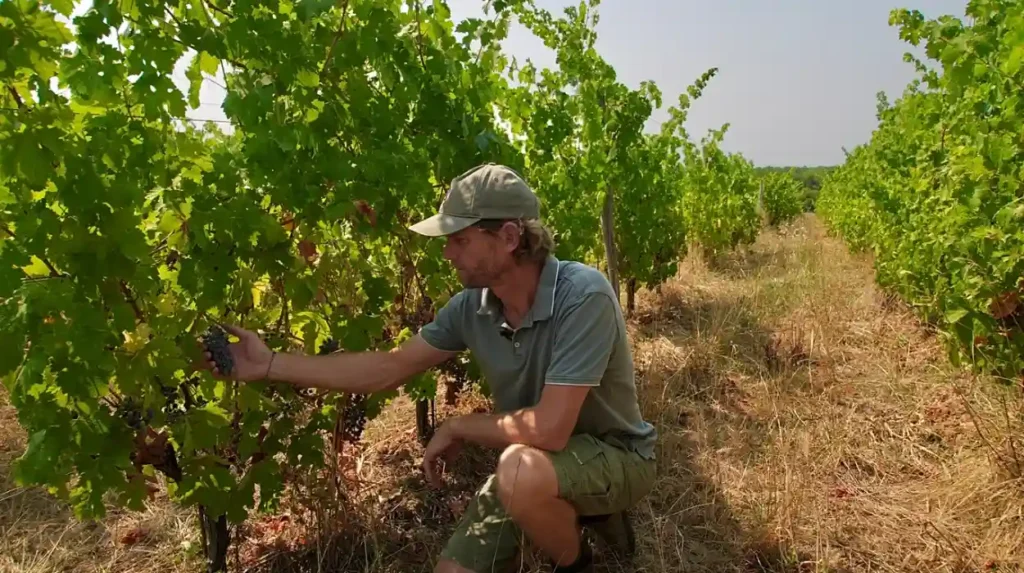
This is the worst time to happen. The grapes are undergoing the veraison process; they go from being tiny green marbles to larger burgundy or golden fruits. This is a critical stage in the development of the grape where smoke can affect the bouquet of the wine. At the time of harvesting the grapes, smoke will have a detrimental effect on the grapes even though all vineyards with the exposure to smoke may not be affected by it.
A landscape on fire and a region under strain
The level of devastation that has taken place around Bordeaux is immense. A land mass covering 56,000 football fields, which is comparable to the size of more than half the land mass of Singapore, has been turned to ashes by the large wildfires that have broken out in southwestern France. It may take weeks if not months before the fire can be brought under full control. The most affected area has been that of Gironde near Bordeaux City, where about 40,000 hectares have been destroyed due to the current wildfire. Overall, over 100,000 hectares of land have been destroyed by various fires across France in the current year.
The human cost too has been huge. Since the breakout of the fire last week, around 42,000 hectares have been destroyed in Gironde resulting in the evacuation of about 220,000 people, which is the largest peacetime evacuation in French history. Over the weekend, there was a thick layer of yellowish orange smoke above Bordeaux City, an elegant city of 260,000 people known to be the capital of France’s wine industry.
Smoke taint: the invisible threat to the 2026 vintage
Even though vineyards are still safe from the blaze, winegrowers fear the grapes might take on a “smoke taint” if fumes from the fires get to the vines. Some wines naturally have ash scents from other sources, but if this flavour impedes the fruity aromas, winegrowers can decide to downgrade their harvest or sell it in bulk to distillers for the alcohol. This is not merely a theoretical risk; smoke compounds can bind to sugars and remain undetectable in fresh grapes, only emerging after fermentation or during ageing.
The Bordeaux Wine Council has reported no direct fire damage to major appellations such as Médoc, Saint‑Émilion and Pomerol, but the uncertainty over quality is already reshaping decisions in cellars and boardrooms. If contamination is confirmed, estates may exclude affected parcels, downgrade lots, or sell bulk for distillation; some may reduce grand‑vin volumes to protect brand reputation.
“It’s too soon to conclude that the smoke from the fires will not affect this year’s vintage,”
industry experts warned in recent briefings, underscoring the caution now guiding every tasting and lab test.
Climate stress before the flames
The fires are the latest in a series of shocks that have characterized a year of severe weather conditions. The extreme summer heat and drought currently experienced in France is affecting the 2026 harvest, with wildfires devastating southern vineyards as the grapes are harvested for the earliest harvest recorded ever. The heat and drought are resulting in an early harvest weeks ahead of schedule while posing new fears about crop and wine loss. Over 11,000 hectares of the southern part of France have been charred by wildfires, prompting evacuation and a red alert for fire danger in several departments.
There has been fire damage to vineyards in Minervois and Roussillon, with local wine producers fearing the possibility of smoke taint that has affected other grape crops previously. Local producers gave accounts of the destruction from the wildfires, which posed danger to homes, vineyards, and animals. In addition, grape harvesting has started earlier than any time in recent memory. The harvest has started in Fitou, with the first fruit harvested on 15 July.
Economic shockwaves across Gironde
The economic fallout from the wildfires near Bordeaux is already being felt across tourism, logistics and small businesses that depend on the region’s wine-driven economy. The fires have burned an area four times the size of Paris and forced 220,000 people to evacuate. July 29, 2026. Wednesday, July 29, 2026. Around 40,000 firms are affected directly or indirectly, with roughly 200,000 jobs linked to those businesses and 130,000 employees unable to work. Wine, agri‑food and logistics account for about 7% of Gironde’s regional economy; the chamber of commerce calls the shock a “mini‑Covid” for local firms.
Tourism has taken an immediate hit. Wine-tourism bookings are down about 40% in Bordeaux during peak season; 70 campsites are closed; 38 camping areas have been evacuated, four hit by flames.
“We are looking at a severe financial hit,”
said Mark Hand, who operates walking and food tours in Bordeaux, reporting that his business is already feeling the economic impact. Prefect Sophie Brocas urged tourists to avoid the region until the situation is controlled, hitting peak‑season revenues. The chamber of commerce president, Patrick Seguin, described an “economic catastrophe,” with tourism—the only dynamic growth area for Bordeaux wine—now hit hard.
Government response and emergency measures
The authorities of France have been swift to characterize the problem as an emergency that requires their attention and assistance of local companies and residents. According to French finance minister, Roland Lescure, the wildfires have become an “economic thunderbolt” for the south of the country, as both local businesses and tourists have been forced to evacuate the area. The measures that include partial unemployment schemes and insurer relief such as the extension of claim periods and evacuation coverage will be implemented in order to minimize the wave of company failures.
The number of liquidation cases in commercial courts of Bordeaux and Libourne increased by 37% in 2026 compared to the last year’s figures, and the peak of the forest fires has not yet occurred. President of the Republic, Emmanuel Macron, claims that it is the most critical situation in the recent decades since World War II. Wildfires that have taken place near the city of Bordeaux in the southwestern part of France have hit a shock to the local economy, Roland Lescure, finance minister of France, said on Monday. The region is one of the wine production centers of France and the center of tourist industry of the country.
Market implications and the road to en primeur
The market implications of the wildfires near Bordeaux will depend on what lab tests and trial fermentations reveal about smoke markers in the 2026 vintage. Analysts outline three scenarios. First, no detectable smoke contamination: the vintage would be assessed on ripeness, yields, critic scores, and release pricing. Second, localized exposure: some châteaux would reduce grand‑vin volumes or declassify parcels; regional output would dip but top labels could hold value. Third, wider contamination: if lab tests and tastings confirm smoke markers across multiple estates, demand could soften and release prices face pressure, with buyers shifting to older, proven vintages.
Historical experience offers some context. The 2022 Gironde fires raised similar fears, but subsequent testing found no widespread smoke taint; 2022 became a highly rated vintage—illustrating that regional fire does not automatically mean tainted wine. Still, the 2026 backdrop is harsher. France’s 2025 vintage was already 16% below its five‑year average, setting a tight baseline before 2026’s climate and fire stresses. Bordeaux is a global export hub; any quality or volume shock can ripple through importers, merchants, and hospitality channels worldwide.
Voices from the vineyards and the city
Inside the wine trade, the mood is cautious and increasingly pragmatic.
“Vines remain intact and wine quality is not expected to suffer from the fires,”
said Thomas Duroux, director general of Château Palmer in Margaux, while acknowledging broader climate stress. Yet other producers are more guarded. Michel Dupont and fellow winemakers warn that smoke plus extreme heat could alter grape chemistry and the character of 2026 wines. Some wines naturally have ash scents from other sources, but if this flavour impedes the fruity aromas, winegrowers can decide to downgrade their harvest or sell it in bulk to distillers for the alcohol.
Beneath the cellars lies an urgent story of humanity. As surrounding towns in southwest France have been evacuated due to rapid spread of the fire, thousands have sought shelter in the city, wondering about the fate of their homes. Last Sunday, a dense cloud of yellowish-orange smoke hung over the city of Bordeaux, an elegant city of 260,000 inhabitants famous as the hub of wine industry in France. The city is located to the east of Médoc wine district which is famous for growing classic varieties of Bordeaux such as Cabernet Sauvignon and Cabernet Franc. Most of the wine-growing area of the region lies to the north and east of Bordeaux, away from the west where fires are burning.