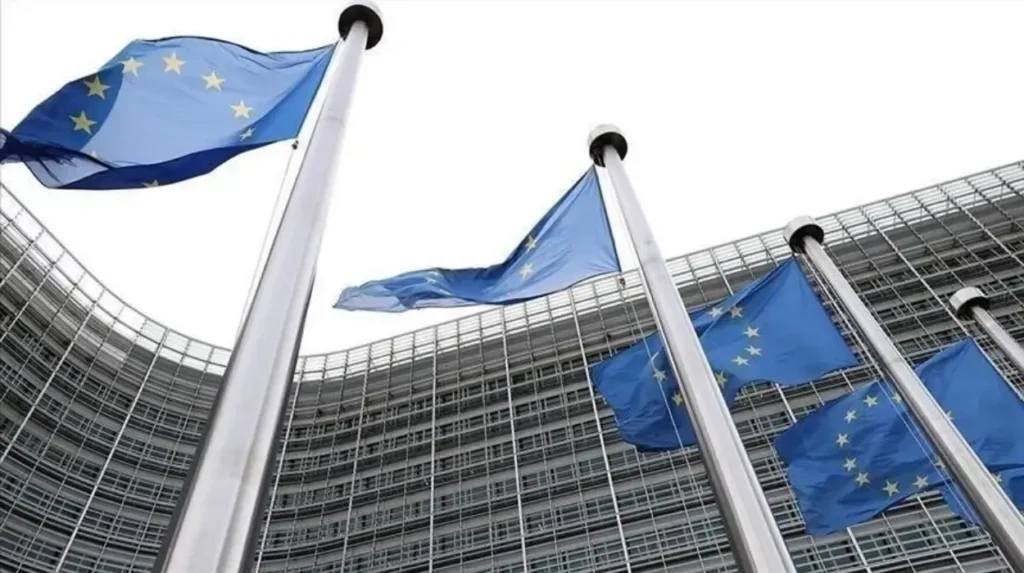
As Europe confronts an era defined by war on its borders, intensifying rivalry between global powers, and the prospect of a significantly enlarged Union, France and Germany are moving to rewire the EU’s institutional engine. Their joint push, captured in the news line France, Germany back reforms for faster EU response to geopolitical challenges, reflects an attempt to turn long‑standing critiques of slow, fragmented EU foreign policy into a concrete reform agenda. At its core, Paris and Berlin are arguing that the EU must become a geopolitical actor capable of quick, coherent decisions on security, sanctions and diplomacy, rather than a bloc paralysed by unanimity and internal divisions.
The two largest members of the European Union are using the power of politics, their importance as having been the “engine” of integration, to force a discussion on a topic that others have been walking on eggshells about – how to get a bloc of 27 and soon 30 nations acting quickly enough to be considered a world power during times of crisis. This is not just a technical discussion of institutional mechanics; rather, it is a strategic maneuver to keep Europe relevant in a world run by Washington and Beijing, and at risk from Moscow.
Why Paris and Berlin say Europe must move faster
France and Germany justify the project in light of various geopolitical events that show the unsustainability of the EU’s existing mode of decision-making. The conflict between Russia and Ukraine is probably the most striking example of such a shock. Sanctions, military aid, and diplomatic messages were all subject to exhausting unanimity discussions that could be held hostage by the internal policies of one or two member states. In their rhetoric, both Paris and Berlin converge on the necessity to reform the existing model in order for the Union to remain credible in its decisions concerning security and foreign policy. The need for flexibility has been especially emphasized by the German politicians. According to them, the EU “needs to move with far greater agility in a rapidly changing geopolitical landscape.” Europe has to learn how to compete, rather than react to, the strategic actions of America and China.
France shares that diagnosis but situates it within a broader narrative: the EU can only credibly pursue enlargement to Ukraine and other candidates if it first adapts its internal structures to manage more complex and frequent crises.
In this context, France, Germany back reforms for faster EU response to geopolitical challenges becomes a shorthand for a wider strategic repositioning. Paris and Berlin are effectively warning that without institutional change, EU foreign policy will remain constrained by veto politics, vulnerable to obstruction by illiberal or hesitant governments, and too slow to respond to security threats and economic coercion.
Reforming EU decision‑making: from unanimity to coalitions of the willing
The push to limit vetoes in foreign and security policy
One of the most sensitive aspects of the Franco-German agenda concerns the proposal to reconsider the issue of unanimity in foreign and security policy. Although neither capital anticipates a quick elimination of this principle, there is an attempt to move toward qualified majority voting (QMV) in a number of issues, including sanctions, some foreign policy statements, and parts of security cooperation. In essence, the idea here is quite simple: a Union where every capital must give its approval for every important decision is likely to remain paralyzed. German diplomats have made it very clear that they will “push harder for quicker decision-making,” warning that a bigger EU would be impossible to manage without change.
Their French colleagues share the same position, but are more prone to stressing the strategic cost of delay, which occurs whenever one country exploits its veto capacity in order to achieve something in another area. In promoting reforms that challenge the principles of veto, both countries deliberately venture into the highly politicized domain, as there are many small or sovereignty-oriented member states who view unanimity as their last resort.
Enhanced cooperation and multi‑speed responses
A second strand of the proposal lies in formalising and legitimising the use of enhanced cooperation and multi‑speed arrangements in crisis response. Paris and Berlin want clearer mechanisms that allow groups of member states—the so‑called “coalitions of the willing”—to advance joint policies when the full EU cannot move at the necessary pace. This concept is already visible in practice, for example in ad‑hoc defence initiatives or funding coalitions for Ukraine, but the current frameworks remain fragmented and politically delicate.
Under the vision sketched by the Franco‑German camp, a future Ukraine‑style scenario would see a core group able to adopt sanctions rapidly, coordinate military assistance and lead diplomatic efforts, with other states joining later or at different levels of intensity. In their analysis, enshrining such possibilities would reduce the risk of one reluctant capital blocking action for the entire Union. Critics worry this could formalise a hierarchy inside the EU, but for Paris and Berlin it is a pragmatic answer to the realities of 27 or more national political calendars.
Overhauling the EU’s diplomatic service: the EEAS under the spotlight
The institutional reform push extends beyond voting rules. France and Germany are also signalling dissatisfaction with the performance of the European External Action Service (EEAS), the EU’s diplomatic arm. They argue that the EEAS is too slow, too fragmented and lacks the strategic clarity needed to operate in an environment where geopolitical shocks have become routine rather than exceptional.
The EEAS will be subject to a radical reform according to officials from Paris and Berlin. These reforms include better chains of command, greater political oversight by member states via the High Representative and enhanced coordination of EU delegations, national foreign ministries, and the EEAS’ Brussels headquarters. On the ground level, it would involve the more efficient merging of intelligence capabilities, the presence of more crisis management units and the aggressive use of EU diplomacy in settling disputes. Most importantly, France is seeking to have the October European Council set out the launch of such talks. Instead of seeing the EEAS as an administrative body, Paris insists on making it clear that the way in which Europe manages its diplomatic apparatus is essential in the way it functions as a geopolitical power. It is an opinion shared by Germany which sees the EEAS as a crucial partner to accelerated decision-making among member states.
The four‑circle Europe: managing enlargement and differentiation
Concentric circles as a geopolitical structure
A major intellectual backdrop to France, Germany back reforms for faster EU response to geopolitical challenges is the Franco‑German expert work on a “four‑speed” or concentric‑circle Europe. The idea is to design the EU in layers: an inner core of states deeply integrated on economic, legal and security matters; a second circle with substantial but lesser integration; a third with more limited participation; and an outer circle associated through economic and political ties without full membership.
From a geopolitical perspective, this architecture is intended to do two things. First, it allows the Union to take in new members—including Ukraine—without forcing all of them immediately into the most demanding levels of integration. Second, it gives core states more room to act quickly and deeply together on foreign and security policy, while respecting that some members or partners may prefer lighter engagement. In the Franco‑German view, this is a way to reconcile enlargement with functionality.
Coalitions of the willing inside a structured Europe
It seems clear that the concentric circle concept can complement the coalitions of the willing approach. Since the EU would have been designed along the lines of levels of integration, then it means that responses to crisis such as sanctions, military missions, and diplomatic interventions would take place within those circles. The core circle could act at the fastest pace and shoulder more responsibility; the rest could act when it is politically possible. This is not about creating a two-class Union for Paris and Berlin; it is all about ensuring that institutional design matches with political considerations.
But such a model brings about some fears to some member states since they think that they will end up in the circles of outer members and hence have little say in matters that concern them. Central and Eastern Europeans especially have the fear that the front-line experience they have concerning Russia may not reflect in the core decision-making process because of the institution hierarchies.
National lenses: how France and Germany frame the stakes
France: from strategic hesitation to geopolitical ambition
French policy thinking has evolved from what observers once dubbed “strategic hesitation” on enlargement to a more assertive geopolitical stance. Paris now presents institutional reform as a necessary pre‑condition for bringing in new members while ensuring the Union can still act effectively. It positions itself as both a security provider and a guardian of European strategic autonomy, emphasizing energy security, continued but transitional reliance on nuclear power, and investments in hydrogen and other future energy infrastructures.
In security terms, France acknowledges that European defence must be reinforced, including with key partners like the United Kingdom, to ensure credible deterrence against Russia and to show the United States that Europe is sharing more of the burden. French leaders stress that a stronger EU security role is not about decoupling from Washington, but about making transatlantic relations more balanced and sustainable.
Germany: from cautious integrationist to reform advocate
Germany, traditionally cautious about radical institutional change, is now more openly advocating reform. Berlin’s reasoning combines practical concerns about the manageability of a larger Union with strategic worries about Europe’s place in a world of power competition. German officials underline that an EU of “30 or more nations” cannot rely solely on unanimity and must have robust mechanisms to act even when not everyone agrees.
The shift also reflects domestic pressures. Germany’s own security posture has been under scrutiny since the start of the Ukraine war, pushing Berlin toward a more assertive role in defence and foreign policy. As public debates over US support for Ukraine grow more contentious in Washington, German leaders see a need for Europe to be able to “do more for bolstering the security of EU member states” regardless of transatlantic fluctuations. For them, institutional reform is therefore part of a broader effort to recalibrate Europe’s security architecture.
Political sensitivities: sovereignty, hierarchy and trust
Despite the fact that France and Germany advocate reforms aimed at speeding up the EU reaction to new geopolitical realities, this shows clearly defined areas of reforms but it reveals contradictions in the Union as well. Small and medium-sized countries have concerns regarding the establishment of the Franco-German directorate over the EU, in case if multi-speed institutions will become the main approach. In particular, small states see the right to use veto and make decisions based on the principle of unanimity as their only tools for defending sovereignty.
Another conflict is related to the issues of rule of law and democracy in the EU. Governments of the Central and Eastern European states claim that any reform should involve strict conditionality of the decisions. There is a concern that multi-circle Europe may unintentionally undermine this aspect in outer circles, or the decision can be made by the core states outside the Union.
Trust is therefore the key currency. France and Germany must convince partners that their drive for speed will not come at the expense of inclusiveness and legal guarantees, and that a core capable of rapid action will remain answerable to the wider Union. The success or failure of their initiative will depend on how convincingly they can address these concerns while maintaining the urgency that motivated the reform push in the first place.
What a Ukraine‑type crisis could look like under the proposed reforms
The practical implications of the Franco‑German agenda become clearer when mapped onto a hypothetical—but realistic—scenario akin to the Ukraine war. Under the proposed reforms, a major security crisis at the EU’s border would likely trigger the following sequence:
First, core states would seek to use qualified majority voting to adopt a rapid sanctions package, eliminating the risk that a single reluctant capital could block or dilute measures. At the same time, a reformed EEAS, working closely with national foreign ministries, would coordinate diplomatic pressure, outreach to partners, and representation in global forums.
Second, coalitions of the willing would be formed to provide military and financial assistance, working through the inner circles of the EU’s new structure. This coalition would seek to act quickly—within weeks not months—while retaining political legitimacy by communicating effectively with the rest of the membership. Third, the outer circles and partners would be approached appropriately, contributing to the operation when they could but not impeding the process. The point is that the Union would be politically united in its values while taking its tactical decisions at varying speeds according to its capacities. To France and Germany, this proposal holds out the prospect of a Union that could become a geopolitical power in practice as well as in theory. To the critics, however, the question remains open whether the political divergences of the past can be reconciled through institutional redesign.