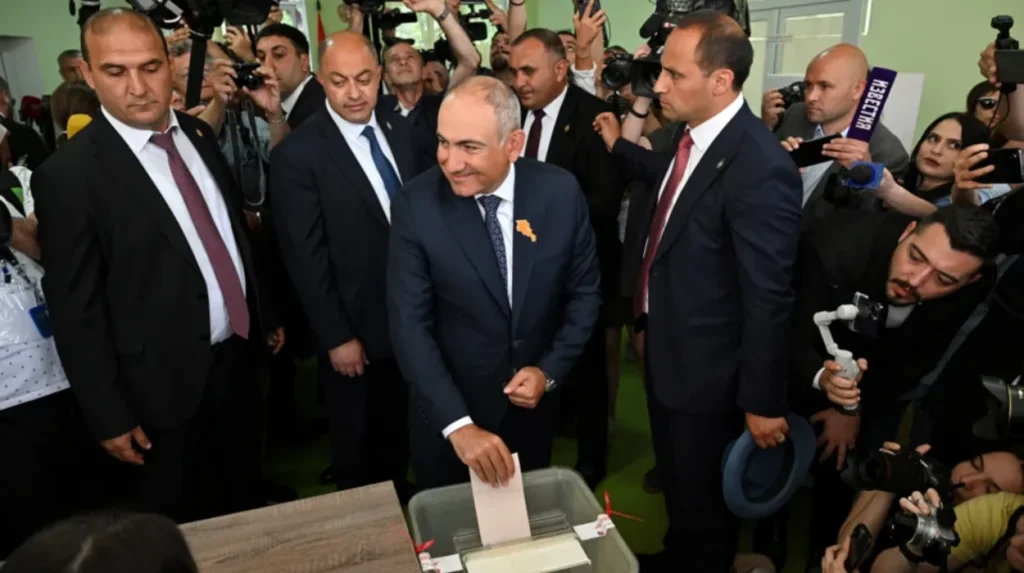
In a historic move that might change the entire geopolitical landscape in the South Caucasus, Armenia’s PM Nikol Pashinyan has won the June 7, 2026, parliamentary elections, despite persistent pressure exerted by Moscow to sway his country towards Russia and away from Europe and America. The early results indicate that the Civil Contract political party led by PM Pashinyan has won almost half of all votes cast during this election process.
The results of the election point to a major turning point in the history of Armenia, which has always maintained close ties with Russia owing to defense and trade agreements, but at the same time finds itself under constant pressure from the former power that ruled over it. The clash was perceived by experts as an examination of Russian influence in the area.
Preliminary Results Confirm Pashinyan’s Mandate
Based on initial counts, the ruling Civil Contract won a comfortable 49.81%, well above that achieved by any other political party and sufficient for Pashinyan to govern alone without having to form any alliances. The level of voter participation was just shy of 60%. It should be noted that opposition forces and pro-Russian groups obtained considerably less support from the electorate.
“The result strengthens PM Nikol Pashinyan’s drive for deeper integration with Europe despite warnings from Moscow,”
reported The Guardian, highlighting how the election outcome bolsters Pashinyan’s push for closer EU ties even as Russia cautions against Western alignment.
This election win is Pashinyan’s third consecutive term as Prime Minister, eight years since the Velvet Revolution which toppled the long-serving dictatorial regime, paving way for an era of progressive governance. His tenure has been characterized by his efforts to develop multiple international relations, improve the democratic framework and deal with the intricate security challenges around Nagorno-Karabakh.
Russia’s Mounting Pressure Campaign Before the Vote
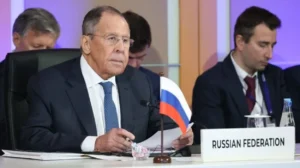
Prior to the upcoming election period, Russia stepped up its campaign to win public favor in Armenia and damage Pashinyan’s rule. Moscow resorted to economic sanctions, propaganda, and rhetoric about the threat posed to Armenia’s sovereignty and security system by this very election process. These actions were interpreted as Russia’s attempt to keep influence in the region while trying to halt Armenia’s move closer to the West.
“Armenia voted Sunday in a parliamentary election set to test Prime Minister Nikol Pashinyan’s tilt to the West, as the country faces threats and allegations of interference from former imperial ruler,”
explained Yahoo News, underscoring the geopolitical stakes of the vote.
Under this immense pressure, Pashinyan ensured that his message remained consistent and centered around the idea of striking a balance between security and development through diversification of allies. According to Pashinyan, closer relations with the United States and the EU would give the country economic options, reforms, and stability without ignoring its relationship with Russia.
Furthermore, President Donald Trump of the United States added his weight behind Pashinyan by posting an open message of support to him on social media on May 27th, wherein he offered his “COMPLETE and TOTAL endorsement” to Pashinyan.
Strategic Pivot: Armenia’s Westward Orientation
This win marks Armenia’s definitive pivot towards Western organizations, as Pashinyan focuses on further integrating Armenia into the European Union and cooperating more closely with the United States, following years of Russian dominance in Armenian foreign policy based on the perception that Russia had not provided adequate protection for Armenia, especially in the case of Nagorno-Karabakh.
“Armenia’s parliamentary elections Sunday will focus on its geopolitical future as Prime Minister Nikol Pashinyan seeks closer ties with the EU and the U.S.,”
reported AP News, emphasizing how the vote centered on long-term foreign policy direction rather than domestic issues alone.
The Pashinyan government has rationalized this shift towards a diversified approach as a means of ensuring the security of the country due to the risks and vulnerabilities posed by its previous strong reliance on Russia. The government has embarked on EU association agreements, dialogue on trade and security with the United States, while still retaining contacts with Russia.
Domestic Implications: Governance and Democratic Norms
In addition to foreign policy implications, the election will have serious domestic implications on Armenia’s political trajectory. Pashinyan’s administration has been commended by reformers for its progress towards promoting democratic institutions, anti-corruption initiatives, and an independent judiciary since the Velvet Revolution. Nonetheless, critics claim that his administration is increasingly consolidating its political power and weakening the balance of power within the country.
This win increases Pashinyan’s political clout as he will be free to pursue his agenda without making any compromises due to the need for a coalition. On the other hand, there are still elements of opposition in the country, with some factions claiming that Pashinyan’s party has manipulated the elections, urging for independent monitoring of voting results.
“Incumbent Prime Minister Nikol Pashinyan is seeking a third term despite falling domestic support,”
noted the BBC ahead of the election, highlighting how Pashinyan faced declining approval ratings yet still secured a plurality through consolidated pro-Western voting.
Regional Security Dynamics: Nagorno-Karabakh and Beyond
The results of the election will determine how Armenia handles the Nagorno-Karabakh problem that Armenia and Azerbaijan have faced for decades. The current Armenian government has pursued diplomacy and negotiations, whereas opponents of Pashinyan’s government claim that Armenia’s westward tilt makes Armenia less capable of negotiating with Azerbaijan and Turkey, which both enjoy good relations with Russia.
However, a pro-western government in Armenia may find it difficult to obtain security assurances provided by Russia. Alternatively, increased collaboration with the EU and the USA can offer Armenia another opportunity to receive military aid and intelligence support, although there are no immediate security assurances from Europe and America, which have traditionally been supplied by Russia.
“Armenia’s pro-Europe party wins election and cements shift away from Russia,”
The Guardian stated, underscoring how the result reinforces a strategic realignment that could reshape regional security dynamics in the South Caucasus.
International Reactions: Washington’s Support, Moscow’s Concerns
The international response to the election results came rapidly. The United States saw the emergence of Pashinyan as a sign of democracy and of the free choice of Armenia to have more connections with both Europe and the US. Thus, the official support of Pashinyan from the Trump administration shows that Armenia’s relations with the West are supported by both parties.
Russia was not pleased with the result since it considers the election process to be a threat to regional stability and existing economic relationships. The Russian government claims that the election campaign is another step made by the West to weaken Russian influence in its sphere of interest.
The divergence in international reactions underscores the geopolitical stakes of Armenia’s foreign policy direction. For the U.S. and EU, a pro-Western Armenia represents an opportunity to expand democratic influence and counter Russian dominance in the South Caucasus. For Russia, it signals a potential loss of strategic leverage and economic integration in a key region.
Economic Stakes: Trade, Investment, and Diversification
The results of the election have economic consequences as well. Armenia had always relied economically on trade and energy supplies with Russia, as well as the remittances of migrant laborers who went to Russia. Moving away from the current relationship with Russia and towards Europe means that Armenia can diversify its economy by opening up new export markets, attracting investments from the EU, and receiving development aid.
Pashinyan’s government believes that Armenia needs to be economically diverse to ensure long-term sustainability. The government is currently working to sign European association agreements and encourage trade and investments from the West. Simultaneously, the government is trying to remain pragmatic and retain economic relations with Russia.
What Comes Next: Challenges and Opportunities Ahead
Pashinyan’s victory sets the stage for continued Westward alignment, but significant challenges remain. The government must navigate complex security dynamics, manage economic transitions, and maintain domestic political stability while implementing reforms. Opposition factions will likely continue to challenge Pashinyan’s authority, potentially complicating governance and legislative progress.
Internationally, Armenia will need to balance relationships with Moscow, Washington, Brussels, and regional powers like Turkey and Azerbaijan. The peace process around Nagorno-Karabakh remains unresolved, and any miscalculation could reignite conflict or destabilize the broader region.
“Result strengthens PM Nikol Pashinyan’s drive for deeper integration with Europe despite warnings from Moscow,”
The Guardian reiterated, emphasizing how the election outcome emboldens Pashinyan’s strategic vision even as geopolitical tensions intensify.
A Defining Moment for Armenia’s Future
This parliamentary election is the watershed moment in the history of the Republic of Armenia after its independence from the USSR. With this overwhelming victory against all odds in the face of Russian intimidation, Prime Minister Nikol Pashinyan once again showed his dedication to pursuing a course of action geared towards Western integration and democratic transformation. This election is a turning point that may very well lead to a paradigm shift in the geopolitics of the South Caucasus region, affecting the security, economic, and governance path of Armenia.