Once again, the Russia-Ukraine conflict has reached another sensitive stage with Ukrainian drones targeting St. Petersburg, following Russian President Vladimir Putin’s rejection of Ukraine’s President Volodymyr Zelenskyy’s initiative for direct negotiations. The attack by the drones on June 3, 2026, on an oil depot in the second largest city of Russia is not only indicative of the expanding range of Ukraine’s long-range strikes capabilities, but also reveals the worsening relationship between both Presidents.
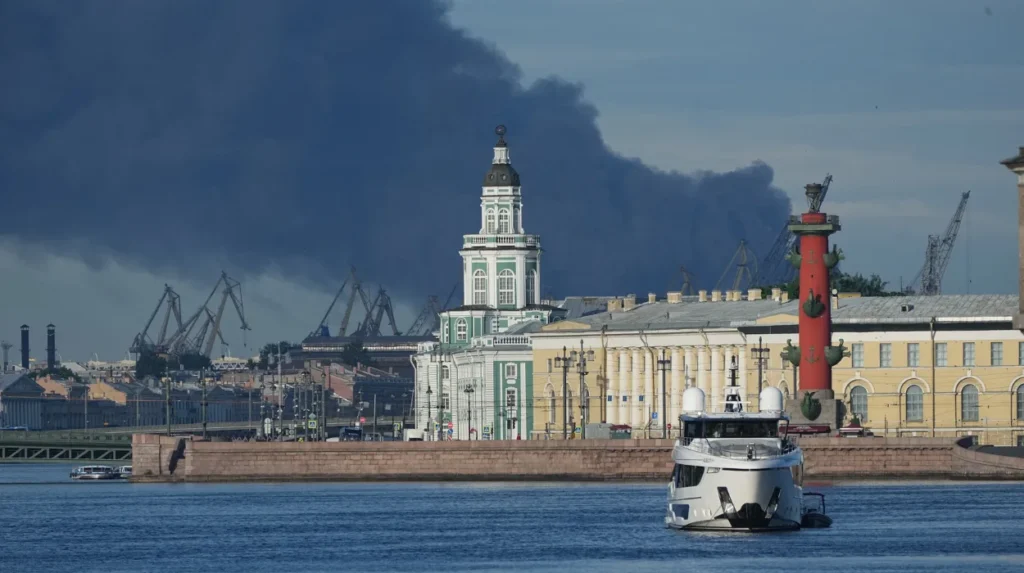
The drone strike, which set fire to an oil storage facility and sent black smoke plumes over the historic city center, was confirmed by Zelenskyy himself.
“Key infrastructures on Russian soil were impacted last night,”
he stated on social media, emphasizing Ukraine’s ability to hit critical energy assets over 1,000 kilometers from its borders.
This attack is not the first on St. Petersburg, but it marks a significant escalation in Ukraine’s asymmetric warfare tactics, targeting high-value economic and military sites deep within Russian territory.
Putin’s Rejection of Zelenskyy’s Talks Offer: A Diplomatic Breakdown
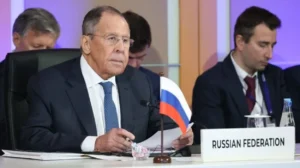
In a stark rebuke delivered at the economic forum, Putin said he saw “no point for now” in holding face-to-face discussions with Zelenskyy. He described the Ukrainian president’s open letter as “boorish” and “rude,” accusing it of being designed to “avoid meaningful engagement”. Putin’s rejection came amid Moscow’s claims of continued battlefield gains in eastern Ukraine, reinforcing his stance that Russia holds the upper hand militarily and sees little incentive for negotiation.
Putin’s remarks were not merely diplomatic posturing. He reaffirmed Russia’s wartime objectives, including the full capture of the Donbas region in eastern Ukraine, signaling that the conflict remains far from resolution. “So far, I see no reason” to engage in direct talks, Putin stated, underscoring the entrenched positions on both sides. His comments reflect a broader Russian narrative that Ukraine is not a credible negotiating partner, while simultaneously projecting confidence in Russia’s military momentum.
The Drone Strike: Tactics, Targets, and Technical Capabilities
This attack conducted by the drones in early June 3 on St. Petersburg was highly precise. Drones from Ukraine travelled over 1,000 kilometers (600 miles) to target the oil installation in close proximity to the city. It was not just the oil installation but a naval base located in Kronstadt that became the target of the attack in the Baltic Sea region. According to Zelenskyy, several locations were attacked.
As per the official reports, the Russian air defense forces shot down 59 drones during the night-time attacks on Russia. In spite of this, the Ukrainian drones were able to strike three different districts of St. Petersburg, causing considerable destruction to the oil refinery facility and starting fires there. Massive clouds of smoke could be seen emerging from the city against the backdrop of its historical skyline while the economic summit was being inaugurated.
This attack reveals the emerging drone warfare tactics employed by Ukraine. With attacks on the oil terminal and naval assets of Russia, Ukraine seems to be disrupting the logistics of energy and military of Russia. This is evident in the trend of Ukraine’s attacks on the oil infrastructures of Russia, which are not limited to those in St. Petersburg but also include neighboring ports.
Strategic Timing: Why St. Petersburg and Why Now?
The drone attack on Moscow did not come by mere chance. This is because the St. Petersburg International Economic Forum, commonly known as “Putin’s Davos,” had just begun. The forum usually acts as a platform through which Russia seeks to display its economic strength even amid the war. The significance of this act by Ukraine was to send a strong message that the war was not only limited to the war front but also had an impact in the heart of Russia’s economy.
The strike also came at a time when Putin was making clear statements regarding the aims of the war he is conducting against Ukraine and that there will be no talks at all. This move seems to indicate a deliberate attempt by Ukraine to put the maximum pressure on Russia through a combined diplomatic and military approach.
Another important thing here is the decision of Ukraine to target St. Petersburg once again. As it already has targeted this city with drones before, the new strikes may be considered as an attempt to put pressure on Russian military infrastructure. In particular, the oil terminal targeted with a strike can have an impact on fuel supply and stability of economy. Moreover, the naval base attacked was used by Russia to operate its military forces on the Baltic Sea coast.
Human Impact and Regional Consequences
Although the drone attack on St. Petersburg caused no deaths, there were casualties. The fire that took place at the oil refinery, along with the smoke covering the city, proved quite disruptive, and the local authorities used emergency services to address the damage caused by it. The psychological effect on the residents of St. Petersburg, who felt that they had been protected from the effects of the war for a long time, was quite strong, given that the historic skyline had become covered with smoke.
On the other hand, Russian aggression towards Ukraine has led to much more human losses. Only days prior to the attack of the St. Petersburg plant, 656 drones and 73 missiles hit different objects in Ukraine during one night. A minimum of 22 people was killed, while many were injured during these events. Such a large number of casualties indicates the existence of asymmetric warfare between Russia and Ukraine, where the attacks of drones in Ukraine target Russian infrastructures, while attacks of Russia are targeted at Ukrainian civilians and infrastructures.
The regional implications of the drone strike include not only physical destruction but also a lot of other aspects. For instance, an attack at the oil facility in Crimea may influence the fuel supply situation in the region, thus affecting the logistical processes in terms of fuel delivery to Russia. The fact of the strike on the Kronstadt naval base creates problems for Russia in terms of military actions in the Baltic Sea area.
International Reactions and Diplomatic Implications
The drone attack on St. Petersburg and Putin’s refusal to talk to Zelenskyy about the talks has gotten the attention of both the international community and other governments. The drone strike in the economic forum, which was organized to show how powerful Russia is economically, has been seen as an indication that the situation in Russia is escalating while at the same time showing how hard it is for diplomats to find a solution to the crisis.
While Zelenskyy has made the effort to initiate the talks, his initiative may not go anywhere due to Putin’s response. The fact that the initiative was done through an open letter shows the readiness to discuss issues with even the international community, something that will not happen due to Putin’s dismissal of the talks.
The incident also raises questions about the future of international engagement in the Russia-Ukraine war. With both sides entrenched in their positions, the path to diplomacy remains blocked. The drone strike and Putin’s rejection of talks signal that the conflict will continue, with both sides using military and diplomatic tools to advance their objectives.
What This Means for the Future of the Conflict
The drone attack on St. Petersburg and the refusal by Putin to engage in peace talks are important landmarks in the Russia-Ukraine War. The fact that Ukraine was able to launch an offensive on Russian territory indicates its increasing strength and willingness to bring the effects of the war to Russia’s homeland. Putin’s refusal to enter into discussions amid global criticism implies that he will continue the war without negotiations.
The dispute looks set to go on as both parties resort to a combination of warfare and diplomacy to achieve their goals. Ukraine is expected to keep launching drones against the Russians, while Russia will keep waging its campaigns in the eastern part of Ukraine. With the diplomatic deadlock between Putin and Zelenskyy, any diplomatic solution to the problem is unlikely to be found anytime soon.
This case serves to illustrate the nature of the conflict as an asymmetric one in which the drones from Ukraine target Russian infrastructure, while Russia targets Ukrainian civilians and infrastructure.
A War Without End in Sight
The St. Petersburg drone attack, as well as Putin’s refusal of Zelenskyy’s proposal for talks, represents how the current situation regarding the Russia-Ukraine conflict stands. Ukraine has shown how serious it is about bringing the effects of the war back into Russia’s territory by using its advanced drones to attack Russian infrastructure. This shows how both sides continue the war without an obvious solution.
In the coming period, there is a strong likelihood that both the parties would continue to use diplomatic and military means in order to achieve their aims. The human cost of this war remains huge; at the same time, its peaceful resolution does not appear to be anywhere on the horizon. The St. Petersburg attack serves as a clear indication that this is not only a war fought on the front lines, but a war waged in the economic and political heart of Russia.