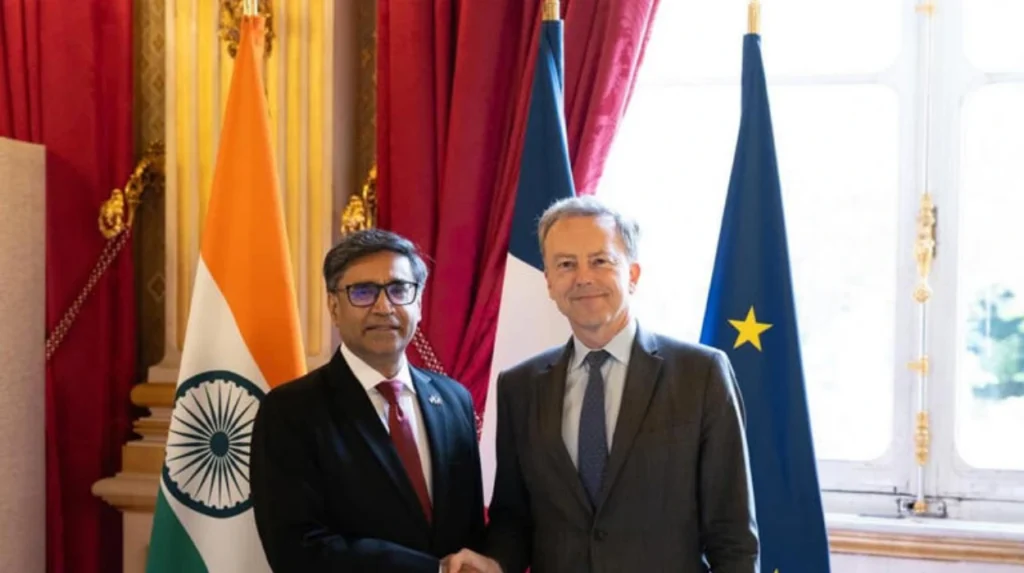
The fact that India-France relations have been raised to Special Global Strategic Partnership is an attempt by both capitals to transcend symbolic drawing together to a long term, systemic coordination. The Foreign Office Consultations in Paris in April 2026 between senior officials on the two sides continued what commitments had been made in the year before during high level visits. These interactions depict the translation of the diplomatic momentum into institutional processes, which makes the global environment increasingly fast-paced and predictable.
This strategic momentum is more pronounced in the case of 2025 geopolitical realignments where both India and France have tried to diversify alliances. France has increased its Indo-Pacific reach and India has sought to have balanced relationships with various centers of power. The alliance therefore becomes not reactive but a proactive structure based on shared strategic independence.
Institutionalizing the partnership framework
The consultations highlight how diplomacy has turned into a matter of institutionalization through bureaucracy rather than summit-driven diplomacy. Through the introduction of collaboration into the routine discussions and working teams, both nations seek to promote continuity despite changes in political leadership.
The institutional approach as well increases policy coordination between sectors where the defence, trade and technology agendas can develop together and not in isolation. It shows an appreciation of the fact that contemporary strategic alliances need a long-term administrative commitment.
Strategic autonomy and mutual alignment
India and France are two countries that place a lot of emphasis on strategic autonomy in their foreign policies and as a result, their alignment is very remarkable. Instead of depending on each other to form an alliance, the partnership rests on the converging interests and flexibility.
With this alignment, each country can have autonomy in its interactions with other players in the international system and yet enhance bilateral cooperation, a balance that is even more crucial in the multipolar world of 2025 and further.
Defence cooperation and evolving security architecture
Defence cooperation has been the core of the partnership with the two countries regarding security cooperation as the foundation of global interaction. The Paris consultations discussed the progress of joint exercises, technology transfer and industrial cooperation all of which help to create a more integrated defence relationship.
In 2025, Indo-Pacific security issues were aggravated, and both states developed more effective coordination of the navy and intelligence sharing systems. The presence of France in the Indian Ocean and the dominance of India in the region establishes a complementary security relationship that enhances the joint posture.
Joint exercises and operational coordination
There is an increasing degree of trust and interoperability between military exercises between India and France, which has increased in frequency and complexity. Not only are these exercises symbolic but have practical uses in preparing against maritime and regional contingencies.
There is also an increase in operational coordination to encompass information-sharing and joint-planning, which is a more profound kind of integration in comparison with previous stages of the partnership.
Defence industry and technology transfer
One of the major characteristics of the partnership is that France is ready to undergo technology transfer and co-production. This is in line with the intention of India to enhance local defence production and decrease dependence on foreign suppliers.
The 2026 discussions have been based on accelerating the joint research and development activities, and increasing the involvement of Indian companies in the French defence projects. This industrial aspect introduces a long-term depth to the partnership.
Economic cooperation and trade expansion pathways
Economic engagement is another vital pillar and both nations intend to increase bilateral trade to a great extent. The latest statistics show that growth has been stable with some of the industries like aerospace, energy and services leading the way, yet both parties are experiencing huge untapped potential.
The Paris consultations touched on regulatory barriers and the investment regime, which was a mutual interest in developing a more favorable environment to do business. This economic program is directly connected to overall strategic goals.
Trade diversification and investment flows
The quest to diversify trade has been on the rise especially in fields like renewable energy and sophisticated manufacturing. The two nations are seeking means of harmonizing standards and curbing administrative obstacles that hamper cross-border investment.
This diversification orientation aligns with the trends of 2025 where the global supply chains are increasingly fragmented and countries are seeking reliable and trusted partners.
Technology and innovation partnerships
Cooperation in technology has become one of the characteristics of the partnership. The futuristic character of bilateral engagement is marked by initiatives in the field of artificial intelligence, digital governance, and space exploration.
India and France seek to influence the world-technology standards, but at the same time, they want to be independent of major technological blocs to some extent. This mutual aim strengthens their cooperation in the area of innovation.
People-to-people connections and knowledge exchange
In addition to the cooperation on the state level, the partnership is gaining momentum with the increasing people-to-people relationships. Educational exchanges and professional mobility are regarded as the key elements of long-term strategic alignment.
In 2025, the two nations broadened programs to support student mobility and research cooperation as both countries realized that human capital is important in maintaining bilateral relations.
Education and research collaboration
Universities and research institutions have also become important players in the relationship and joint programs, as well as collaborative projects, are becoming more popular. Such programs help in the transfer of knowledge and innovation.
Attempts to simplify academic recognition and visa procedures have also been mentioned, to eliminate obstacles to educational exchange.
Skilled workforce mobility
The movement of skilled professionals between India and France is another area of focus. French industries benefit from access to Indian talent, while Indian professionals gain exposure to European markets and technologies.
This mutual exchange supports economic growth and strengthens the social foundations of the partnership, making it more resilient to political fluctuations.
Regional and global coordination in a changing order
There is also the partnership in regional and global issues coordination as a reflection of common concerns regarding the stability and governance. Developments in West Asia, the Indo-Pacific and in the world economic trends were discussed in Paris.
As the two nations have focused on bilateralism, they have stressed on the significance of multilateralism. This is a two-sided strategy that enables them to interact with the international organizations and pursue their own strategic interests.
Indo-Pacific and maritime security
The Indo-Pacific remains a central focus, with both India and France advocating for a rules-based maritime order. Their cooperation in this region reflects broader concerns about freedom of navigation and regional stability.
Joint initiatives in maritime security demonstrate how the partnership contributes to addressing shared challenges in critical sea lanes.
Multilateral engagement and global governance
India and France continue to collaborate in multilateral forums, seeking to influence global governance structures. Their partnership provides a platform for aligning positions on issues such as climate policy, trade rules, and security frameworks.
This multilateral dimension enhances the global relevance of their bilateral ties, positioning them as active contributors to international stability.
Emerging challenges and strategic uncertainties
Despite the progress, the partnership faces challenges that could shape its future trajectory. Differences in economic priorities, regulatory environments, and geopolitical alignments may require careful management.
At the same time, the evolving global order presents uncertainties that test the resilience of bilateral relationships. Both countries must navigate these complexities while maintaining momentum in their cooperation.
Balancing interests in a multipolar world
India and France operate in a multipolar environment where alliances are fluid and interests often intersect. Maintaining balance while deepening bilateral ties requires continuous diplomatic effort.
This balancing act is particularly relevant in areas where their broader strategic interests may diverge, necessitating flexible and adaptive approaches.
Sustaining momentum beyond political cycles
Ensuring that the partnership remains robust beyond individual leadership terms is another challenge. Institutional mechanisms established in recent years are intended to address this concern, but their effectiveness will depend on sustained commitment.
As global dynamics continue to evolve, the ability of both countries to adapt their partnership framework will be a key determinant of its long-term success.
The deepening of the India France Special Global Strategic Partnership in Paris reflects more than a diplomatic milestone; it signals an attempt to construct a durable, multi-dimensional relationship in an increasingly complex world. Whether this framework can translate into tangible outcomes across defence, technology, and global governance will depend on how effectively both nations align their ambitions with practical implementation, leaving open a broader question about how such partnerships can redefine cooperation in a fragmented international system.