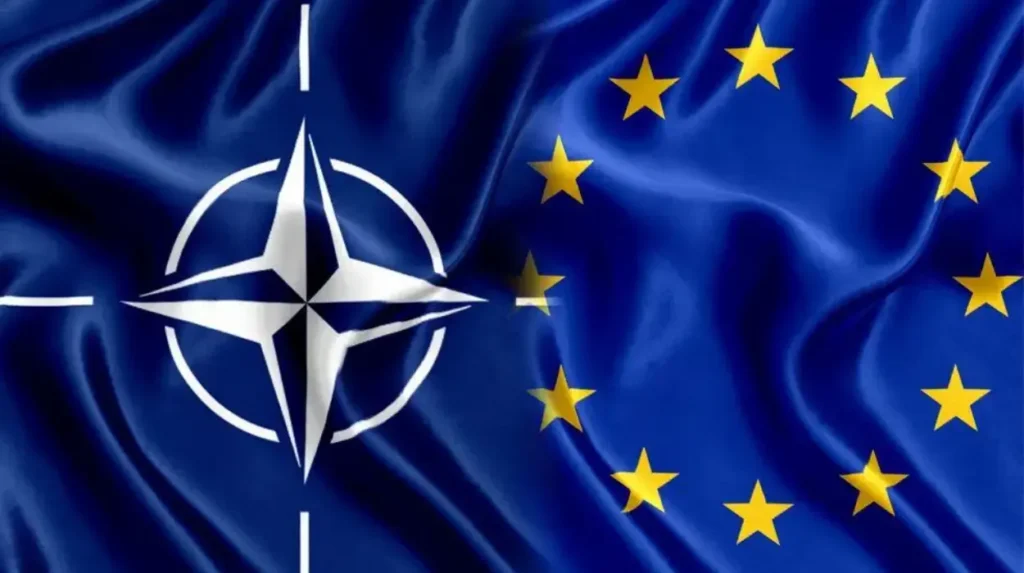
The autonomy of EU defense between NATO and European forces has become one of the characteristic strategic arguments in the security environment in Europe. It represents an attempt to increase the strength of Europe to pursue its own actions without being out of step with transatlantic commitments. The notion extends beyond military capabilities, including decision making, industrial capabilities, and coordination of operations.
This twin aspiration has acquired acuity in 2025 as the geopolitical uncertainty keeps redefining the global security frameworks. European policymakers are starting to perceive autonomy not as a break with alliances but as a system of reinforcement that enables Europe to act when collective systems are at a loss or limitation.
Expanding scope beyond military capability
Logistics, intelligence sharing, cyber resilience and chains of defense resilience are now part of autonomy. European institutions underline that dependence on external actors in these spheres can restrict the ability to operate effectively in case of crisis.
Political signaling and strategic reassurance
The drive towards independence is also political. It sends a message to friends and foes that Europe still would be a credible security player with the ability to deal with its own local issues.
NATO at the core of European security
Without the recognition of the central role played by NATO, the EU defense autonomy between NATO and European forces is inexplicable. The alliance has continued to be the heart of collective defense in Europe especially in the form of deterrence mechanisms and combined military planning.
This structural fact establishes a complicated dynamic in which autonomy efforts are forced to covert with the established dominance of NATO in high-end capabilities. This interdependence is further enhanced by the fact that more than 50% of the EU member states are also members of NATO.
Dependence on strategic enablers
The intelligence, surveillance, and long-range operational support of the European forces is still supported by NATO-led systems. Such capabilities are needed in case of high-intensity conflict situations, which restricts the degree of complete independence.
Institutional coordination frameworks
The collaboration between the EU and NATO has been strengthened with joint declarations and coordinated programs in 2025. Such mechanisms are meant to deter duplication but should see European efforts lead to larger alliances objectives.
Operational realities and capability gaps
Although there is a trend in politics, the issue of practical constraints has been a key challenge in EU defense independence between NATO and European soldiers. The lack of capabilities remains as a limit to Europe being able to respond to complex military situations on its own.
Raised defense expenditure in Europe has not completely been converted into combined capabilities. Investment decisions are usually slowed down by national priorities.
Shortfalls in advanced systems
Europe is continuing to experience loopholes in air security, logistic transportation, and secure communication networks. These shortcomings underscore the dependency on NATO infrastructure during times of crisis.
Fragmented procurement strategies
Varied national procurement strategies decrease effectiveness and raise expenses. There is a continuous effort to balance defense investments to no avail, as it is politically and industrially unpopular.
European led mechanisms and autonomy projects
The EU has come up with a number of institutional instruments to enhance coordination on defense and minimize fragmentation. These mechanisms are created to help with long-term autonomy with the compatibility to NATO structures.
In 2025 the focus has moved to developing a more holistic planning system that would conform national plans with shared goals.
Coordinated defense planning initiatives
The capability assessment and joint planning programs are designed to simplify investments. These efforts aim at making sure that member states come up with complementary systems and not competing systems.
Operational experience through EU missions
Missions led by the EU offer hands-on experience in coordination and deployment. Though small, they help in developing institutional trust in autonomous activities.
Industry sovereignty and transatlantic tensions
Independence of defense has a strong connection with industrial policy, so EU defense independence between NATO and European forces is as much an economic as a strategic concern. European leaders are raising the need to produce defense by itself.
This has brought controversy on its effect on transatlantic relations especially in terms of market access and technological exchange.
Strengthening European defense industries
The main focus of avoiding reliance on outside suppliers is joint production programs and cross-border cooperation. The intention behind these initiatives is to build resilience within the supply chains.
Balancing openness and protection
Although autonomy is positive in terms of inner growth, overprotection can destroy interoperability with the NATO allies. This is one of the major policy design challenges.
Diverging member state perspectives
The divergence between EU countries is one of the major factors that influence the course of defense autonomy. The national priorities are determined by geographic location, historical experience, and the perception of the threat.
These differences bring about a stratum of EU defense autonomy between the NATO and European forces, in which consensus may be gradual and unanimous as opposed to holistic.
Eastern and northern security priorities
Countries closer to Russia tend to prioritize NATO’s deterrence capabilities. For these states, autonomy initiatives are supportive rather than transformative.
Western European strategic ambitions
Some Western European countries advocate for a stronger independent role. They emphasize the need for Europe to act beyond NATO’s traditional geographic focus.
Strategic outlook for 2025 and beyond
The evolution of EU defense autonomy between NATO and European forces reflects a broader shift toward a multi-layered security architecture. Rather than replacing NATO, European initiatives are gradually redefining how responsibilities are distributed.
In 2025, this process is shaped by external pressures, including regional conflicts and shifting alliances. European policymakers are increasingly focused on creating flexible structures that can adapt to changing conditions without undermining existing commitments.
The interplay between autonomy and alliance is unlikely to produce a clear endpoint. Instead, it suggests a future where Europe operates within overlapping frameworks, balancing independence with cooperation. As capability development continues and political consensus evolves, the defining question remains whether Europe can translate its strategic ambition into practical readiness without disrupting the delicate equilibrium that has underpinned its security for decades.