France rules out forceful intervention as tensions surrounding the Strait of Hormuz continue to influence global shipping and energy markets. The announcement reflects a carefully calibrated diplomatic message that distinguishes between direct military involvement and participation in defensive maritime security missions once the intensity of regional conflict declines. By articulating this distinction, Paris aims to maintain credibility among allies while avoiding the perception that it is entering an active conflict zone.
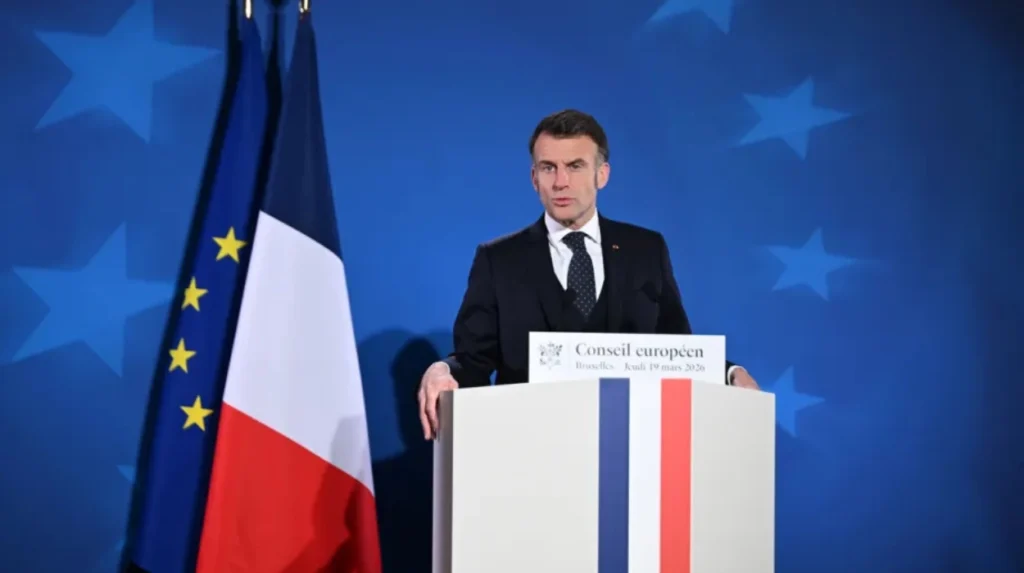
Public remarks from Emmanuel Macron during European policy discussions in March 2026 underscored this position. French officials clarified that operations designed to forcibly reopen the Strait would not receive French participation under current conditions. Instead, the government has emphasized that its naval strategy is focused on post-conflict stabilization, signaling that maritime security could become a priority once hostilities begin to ease.
Diplomatic Messaging Toward Allies
France rules out forceful intervention while maintaining strong coordination with European partners. The approach reflects ongoing discussions within the European Union and broader allied networks about how to manage maritime disruptions without escalating confrontation with regional actors. By communicating a defensive posture early, France reduces the likelihood of misinterpretation among partners who might otherwise expect greater operational involvement.
This messaging also serves a practical purpose in coalition planning. France’s willingness to support future escort missions provides reassurance that European navies may contribute to stability operations even if they decline participation in combat scenarios.
Distinction Between Combat Operations And Maritime Security
The policy line articulated by French officials highlights a deliberate separation between warfighting and trade-route protection. Military intervention aimed at breaking a blockade or confronting regional forces carries political and legal implications that differ significantly from escorting civilian shipping once hostilities subside.
This distinction has become central to France’s diplomatic narrative. By emphasizing that any future mission would be defensive and conditional, Paris signals a readiness to support international commerce while avoiding entanglement in ongoing military escalation.
Legal And Strategic Foundations Of The Policy
France rules out forceful intervention partly because its government has consistently framed overseas deployments through a legal and multilateral lens. The emphasis on international maritime law and the protection of civilian shipping routes provides the basis for distinguishing acceptable defensive operations from coercive military campaigns.
The French approach also reflects lessons drawn from earlier maritime security missions in nearby regions, where coalition activities were designed to deter attacks without directly entering conflict dynamics involving regional powers.
International Maritime Law Considerations
French policymakers frequently reference established legal frameworks governing navigation rights in international waters. These principles emphasize the protection of shipping lanes essential to global trade, particularly in strategic chokepoints like the Strait of Hormuz.
By grounding its policy within legal norms, France aims to build broader international support for any future maritime mission. Legal justification is particularly important for European governments that require parliamentary approval before deploying naval forces abroad.
Maintaining Diplomatic Neutrality In A Regional War
France rules out forceful intervention also as a means of preserving diplomatic flexibility in the Middle East. The conflict dynamics involving Iran and its adversaries have created a complex environment where overt military participation could limit France’s ability to act as a mediator or diplomatic interlocutor.
This neutrality does not imply disengagement from the region. Instead, it reflects a strategy in which France attempts to remain involved in diplomatic processes while avoiding direct combat roles that could alter its perceived position among regional actors.
Strategic Communication With Regional States
Another element of the policy involves maintaining open communication channels with Gulf countries and other stakeholders dependent on maritime trade routes. French officials have sought to reassure partners that stability in the Strait remains a shared priority even without immediate military intervention.
These communications help position France as a participant in long-term maritime security planning rather than a state withdrawing from responsibility.
Economic Pressures Influencing The Policy Debate
France rules out forceful intervention amid significant economic considerations linked to the Strait of Hormuz. The waterway remains one of the world’s most critical energy transit routes, handling a large share of seaborne oil shipments. Any disruption can quickly influence commodity markets and supply chains across multiple continents.
Developments in 2025 demonstrated how rapidly market conditions can shift when tensions rise in the Gulf region. Oil price fluctuations and increased shipping costs reinforced the importance of reliable navigation through the Strait.
Energy Supply And Global Market Sensitivity
Energy analysts have repeatedly identified the Strait of Hormuz as a major geopolitical risk factor. The region’s instability can translate into price volatility, affecting both producing and consuming nations. France’s policy signals awareness that restoring safe shipping conditions eventually will require coordinated international efforts.
Rather than pursuing immediate military action, France’s strategy suggests that stabilizing the market environment will depend on a broader diplomatic resolution to regional tensions.
Insurance And Shipping Industry Concerns
The insurance sector plays a critical role in determining whether commercial vessels enter high-risk maritime zones. Rising premiums and security warnings in 2025 led several shipping companies to divert cargo routes away from the Gulf, increasing transit times and operational costs.
French economic officials have noted that escort missions could help rebuild confidence once threats diminish. However, they have also emphasized that such operations must occur under conditions where risks are manageable.
Trade Route Stability As A Policy Priority
France rules out forceful intervention while still acknowledging that the stability of trade corridors remains a strategic objective. Ensuring reliable maritime access is essential not only for energy shipments but also for broader commercial exchanges between Europe, Asia, and the Middle East.
This perspective places maritime security within the broader framework of economic diplomacy rather than purely military strategy.
Coordination With Allies And Multilateral Institutions
France rules out forceful intervention while continuing discussions with allies about potential frameworks for securing maritime traffic after conflict intensity declines. Multilateral coordination remains central to any future mission, particularly because escort operations require logistical integration among multiple navies.
France’s emphasis on working through international institutions reflects a long-standing preference for collective security arrangements rather than unilateral action.
European Cooperation On Maritime Security
European governments have held consultations regarding how naval assets could contribute to protecting commercial vessels in high-risk areas. These discussions gained momentum in 2025 when disruptions in both the Red Sea and the Gulf highlighted the vulnerability of maritime trade routes.
France’s policy stance suggests that future missions could involve several European states operating under a coordinated command structure, provided legal mandates and political approvals are secured.
Engagement With United Nations Frameworks
Paris has also explored the possibility of aligning maritime security initiatives with United Nations processes. A UN-supported framework could provide legitimacy and encourage participation from countries beyond traditional Western alliances.
Such an arrangement would also reduce the likelihood that escort operations are perceived as an extension of ongoing military campaigns in the region.
Planning For Post-Conflict Maritime Operations
Even while ruling out immediate intervention, France has continued planning for scenarios in which naval escorts may become necessary. Strategic planning includes evaluating deployment capabilities, communication networks, and coordination mechanisms among potential partners.
This preparation illustrates how France seeks to remain ready for stabilization missions without altering its current stance on combat involvement.
Regional Reactions And The Wider Strategic Environment
France rules out forceful intervention in a regional environment shaped by ongoing confrontation and shifting alliances. Iran’s responses to military pressure and its approach to maritime strategy play a significant role in determining how external proposals are perceived.
At the same time, Gulf states and major trading nations closely watch diplomatic developments related to the Strait. Their economic reliance on stable shipping routes gives them a strong interest in the outcome of these policy discussions.
Iran’s Strategic Calculations
Iran’s leadership has historically viewed foreign naval deployments near its coastline with suspicion. From Tehran’s perspective, even defensive escort missions can raise concerns about external influence over regional waterways.
France’s decision to avoid forceful intervention may therefore be interpreted as an attempt to reduce tensions while preserving diplomatic engagement channels.
Gulf States And Maritime Stability
Countries across the Gulf region depend heavily on uninterrupted shipping for both exports and imports. Their responses to international maritime initiatives often reflect the balance between security cooperation and concerns about escalation.
France’s cautious approach could appeal to states seeking stability without increased militarization of the Strait.
The Evolving Security Debate In 2026
The broader conversation about maritime security in the Gulf continues to evolve as regional dynamics shift. Discussions about escort missions, legal mandates, and diplomatic engagement illustrate how major powers are reassessing their roles in safeguarding global trade corridors.
France’s position contributes to this debate by highlighting the complexities of balancing responsibility, alliance expectations, and the risks associated with direct military involvement. As tensions fluctuate and negotiations continue across diplomatic channels, the approach adopted by Paris may influence how other countries define their own thresholds between intervention and stabilization in one of the world’s most strategically sensitive waterways.