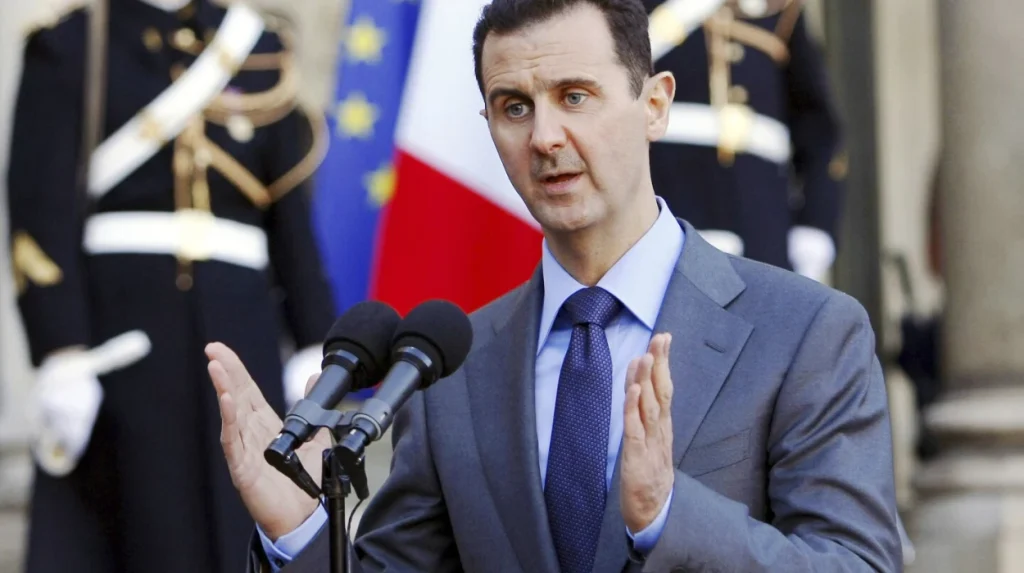
On 25 July 2025, French supreme court Cour de Cassation gave a final decision on a legal case that has drawn international attention over years. A 2023 arrest warrant against former Syrian President Bashar al-Assad on suspicion of war crime and crime against humanity on chemical attacks in Ghouta (2013) and Douma (2018) that killed more than a thousand civilians including French nationals was annulled by the court. According to an established principle of international law, the judgment was based on person immunity of incumbent heads of state even when it involved severe crimes like the genocide or chemical war.
This tenet is referred to as personal immunity and it grants immunity to the present-day state leaders against criminal prosecution in international jurisdiction. The court stressed the idea that even though France ceased to recognize the presidency of Bashar al-Assad on an official level since 2012, the actions of the latter as a formally constituted figure made the arrest procedure legally invalid during the time of generating the warrant. This decision served as a confirmation that internal interpretations of laws have to comply with the international custom and precedence, which constrains the possibilities of national jurisdictions to destabilize the power of the leaders who remained in office.
Addressing The Post-Office Scenario
Differentiating Immunity From Accountability
More importantly, the court made a distinction between the immunity of sitting leaders and the responsibility and responsibility regime available after they leave the leadership. Following the forced removal of Assad in power in December 2024, and his departure to Russia, the court has been bound to recognize the possibility of a new course of law. This becomes a means of creating a new process of arrest warrants against his earlier behavior which cannot be used under the immunity benchmark that previously served him.
This difference is calculated leeway of legal positioning: it leaves a sense of honor to the sovereignty of the state and recognizes the necessity of international justice at the same time. It also highlights a new development towards transitional justice, where the past leaders are subject to retrospective judgement, especially in the environments that are systemically violent and that result in crimes against humanity.
A Shift Toward Deferred Justice
Although immediate prosecution was curtailed by the immunity doctrine, the ruling leaves room for future judicial proceedings. With Assad now a private citizen in exile, French prosecutors can revive efforts to investigate and charge him. While symbolic in some respects, this path offers victims and human rights defenders a measure of hope that justice remains within reach, even after prolonged delays.
Reactions And Implications For Justice And International Law
Disappointment Among Human Rights Advocates
The decision attracted the sharp criticism of the law experts and humanitarian rights defenders. President of the Syrian Center of Media and Freedom of Expression Mazen Darwish described the decision as a lost opportunity to defend universal responsibility, and that the decision sends a signal of impunity to other similar oppressive regimes. He posited that the use of immunity to disregard justice in crimes such as use of chemical attacks compromises global standards that are used to prevent this kind of behavior.
Mariana Pena, the lawyer representing the Open Society Justice Initiative, recognised the ruling as a blow but welcomed its partial reversal in the capacity to bring forth future litigation. She observed that immunity prevented direct prosecution, but the fact that the court was clear on the liability after offices was one way forward towards a moving international justice system.
Legal Rationales And Constraints
The decision by the panel of 19 judges was unanimous and Christophe Soulard, the president of the Cour de cassation defended that it was in accordance with international legal doctrine and did not run counter to established norms of procedure. He emphasized that the annulment of the 2023 warrant does not close the door entirely and highlighted the court’s commitment to judicial pathways that might support future accountability efforts through admissible legal means.
That decision overruled a 2024 decision of the Paris Court of Appeal which affirmed the warrant and indicates how controversial and dynamic legal reasoning has become over the concept of head-of-state immunity and international criminal jurisdiction.
Broader Context: Syrian War Crimes Accountability And International Justice
Political And Humanitarian Backdrop
The regime of Assad has a record of systemic war crimes being accused of using banned chemical weapons against civilians. The Ghouta and Douma attacks are among the most infamous and had most of the world condemning them and rights groups and investigative bodies going on to document them extensively. Having a large number of victims being French nationals, the French judiciary has certain jurisdictional bases to conduct proceedings in terms of universal jurisdiction.
His removal by Islamist rebelling groups at the end of 2024 changed the legal framework and eliminated obstacles to direct prosecution that had been present during his tenure. But the fact that he is now staying in Russia presents logistical difficulties in any future prosecution of him.
France’s Role In War Crimes Litigation
France has become one of the most active locations in which to pursue international crimes on the basis of the universal jurisdiction principle where international courts are restricted or politically incapacitated. The Assad case represents an example of the attempt achieved by domestic legal systems to increase the proximity of its accountability beyond the international courts, especially in cases of no cooperation with The Hague or some other organizations.
This case is not only about demonstrating but also examining the limits of those schemings, and it gives us an idea of how sovereignty, legitimacy as well as justice, are being re-conceptualized in the context of former leaders indicted of gross atrocities.
Future Prospects And Challenges For War Crime Prosecution
Political And Legal Hurdles
Despite the technical opening for prosecution, numerous obstacles remain. The fact that Assad is in Russia, an unlikely candidate either in extradition or enforcement makes the legality of the issue largely symbolic in the short run. Moreover, he is still supported by some members of the Syrian political elites and the regional political elites that makes resolving issues through diplomacy and enforcement difficult.
The argument of the critics is also that the current form of the legal framework with the provision of immunity in office creates a loophole through which leaders can engage in impunity until they are purged. Human rights organizations are calling on a change in international law so as to close such an accountability gap so that the worst crimes are not temporally impregnated by status alone.
Opportunities For Victims And Strategic Litigation
However, the ruling comes in the midst of limited capacity to take up the challenge on accountability with new vigor. French and foreign magistrates and international legal analysts are supposed not to lose hope and keep on gathering evidence, speaking with people, and preparing charges against Assad and other members of the regime. It encompasses former officials like Adib Mayaleh, the former finance minister of Syria whose immunity pleas have already been rejected in France, a move that strengthens the legal grip that will help in future trials.
As we can see in the verdict, Litigation of war crimes is increasingly becoming decentralized, and the significant role is played by domestic courts as a means of seeking justice when international systems are stunted or the efforts to seek justice are quashed by state interests.
International Legal Ramifications And Evolving Norms
Reconciling Sovereignty With Accountability
The judgment leaves the French courts at the centre of a worldwide controversy on how the sovereign immunity of heads of states can be reconciled with the increasing international expectations of justice. It highlights the drawbacks of the available agreements and legal standards in addressing complicated cases consisting of strong people and geopolitical tension.
It also reflects the gradual but noticeable change of hearts across the globe- one in which responsibility is not only the preserve of post-conflict courts but one that is simply being vigorously sought in national legal systems where international courts are either unavailable or very sluggish.
Toward Legal Innovation In Transitional Justice
The decision may encourage legal scholars and international policymakers to refine frameworks surrounding immunity, perhaps advocating for conditional exceptions in cases of mass atrocities. At a time when impunity remains a pressing issue, particularly in active conflict zones, balancing justice with diplomatic protocols demands innovation.
This person has spoken on the topic: Legal expert Hanan Alnahhas recently commented that
“France’s highest court ruling underscores a clash between rigid international legal traditions and evolving demands for accountability, and while disappointing, it pragmatically opens a pathway for future prosecutorial action against Assad.”
Disappointed the French court invalidated Assad’s arrest warrant. shocked to think the’d be immune from prosecution for gassing civilians if he were still in power. Glad he’s no longer in office, and justice can still be served. My heart is with victims denied justice by immunity
— Houssam Alnahhas (@h_alnahhas) July 25, 2025
France’s nuanced ruling reflects the growing complexity of achieving justice for atrocities committed under sovereign cover. While grounded in established legal tradition, it also opens space for renewed legal and moral engagement. The question now turns to whether international law can evolve swiftly enough to address the urgent demands of justice in the aftermath of prolonged, brutal conflicts—and how legal institutions will navigate this path in the face of persistent political resistance.