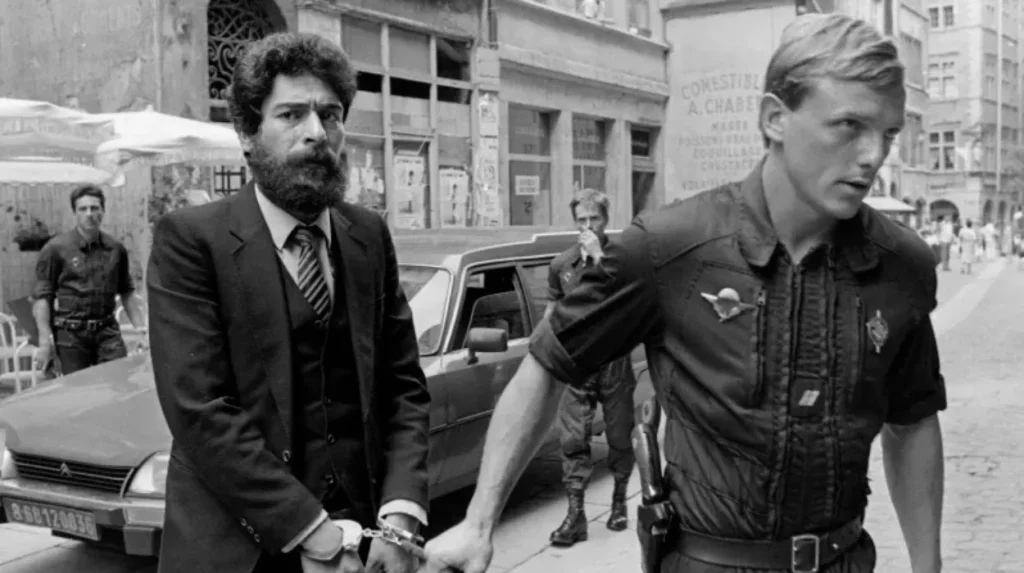
A school teacher named Georges Abdallah co-founded a communist urban guerrilla group in 1975 in reaction to the start of the Lebanese Civil War. The “Lebanese Armed Revolutionary Factions,” or LARF, were the group that carried out several bombings and killings around Europe and, to a lesser extent, in Lebanon. Abdallah was given a life sentence after being accused by French authorities of carrying out two such attacks on an Israeli ambassador and a US military attaché. Since 1999, Abdallah has been eligible to ask for parole more than thirteen times, but each time he was denied or told to remain in jail until his most recent hearing.
Lebanese revolutionary’s imprisonment
The Syrian Social Nationalist Party (SSNP), which advocated for a pan-Syrian state spanning many Arab states, was where Georges Abdallah started his violent career in the early 1970s. He did, however, quickly join the Popular Front for the Liberation of Palestine (PFLP), a militant, secular, Marxist party that was a component of the Palestinian Liberation Organization (PLO), a coalition of Palestinian organizations that opposed the creation of Israel. With the formation of the PFLP-EO (External Operations) in 1979, which was made up of some of the most radical PFLP members and was in charge of significant terror incidents like the Lod Airport shooting, the PFLP broke up. Abdallah also split from the PFLP that year, assisting in the formation of the LARF. The majority of the Marxist Maronite Catholics that made up the LARF were from Qubayat, a town in northern Lebanon. Although they modeled most of their tactics on the numerous leftist urban guerrilla organizations that were active in Europe throughout the 1970s and 1980s, little is known about the Lebanese Armed Revolutionary Factions. These included the French Action Directe, the German Red Army Faction, and the Italian Red Brigades. Additionally, it was thought that the LARF had ties with each organization, which aided in the advancement of their European operations.
Release announcement
The fact that the LARF was composed of Maronite Catholics, a group in Lebanon that had largely backed Israel during the Lebanese Civil War because they believed it would allow them to maintain control over the political establishment, is one aspect of the group that is highly intriguing when considering Lebanese society. However, since Israel invaded and occupied Lebanon in 1982, this opinion has started to shift. Abdallah and the LARF in Europe launched a campaign of bombings and assassinations against US and Israeli diplomats in 1982 as a result of this invasion. Furthermore, the LARF groups that were active in Beirut and other parts of Lebanon targeted anyone they believed to be working with Israel and the West. US military attaché Lt. Col. Charles R. Roy was shot once in the head by a lone shooter using a semi-automatic 7.65mm pistol on January 19, 1982, as he was making his way to his automobile in Paris at approximately nine in the morning. The gunman, who was described as being small and having long hair, managed to flee on foot and was never apprehended. The LARF asserted that Beirut was responsible for the attack.
French legal proceedings
Following the incident, no one was apprehended. A similar event occurred in March 1982 when Robert Homme, the US Consul General, was shot three times while leaving his Strasbourg, France, office. In contrast to Lt. Col. Roy, Homme lived through his wounds because they were deemed “superficial” and not life-threatening. In a letter to French news organizations, the LARF would also claim responsibility for this attack. Yacov Barsimantov, an Israeli official, was the subject of another shooting that occurred in April, just one month later. As he left his Parisian residence, Barsimantov was shot three times in the head, instantly killing him. The assailant, who was identified as a female rather than a man, used a 7.65mm semi-automatic revolver, just like Lt. Col. Roy. The LARF did not claim credit for the attack, in contrast to the previous two. The Israeli embassy in Paris likely had no idea which particular organization was responsible for the attack because they accused the PLO.
Background of the revolutionary
Abdallah’s most recent court-ordered release took place on November 15th, with a December 6th release date. However, he must depart France. This comes after a similar court decision from 2014 that was denied by Manuel Valls, the French interior minister at the time. Since Abdallah’s initial application for release in 1999, the United States has backed the French anti-terrorism prosecutor’s decision to challenge Abdallah’s release. Given the continuing crises in both Lebanon and the Gaza Strip, it is not a surprise that Israel is unhappy with the recent decision to free Abdallah. The outcome of the French anti-terrorism prosecutor’s appeal and Abdallah’s release are yet unknown. Given that he is already in his 70s, it is quite doubtful that Abdallah himself will participate in any combat if he is freed. But because of his widespread support among the far-left and progressive elements in Europe, Lebanon, and Palestine, Abdallah may choose to focus on politics rather than violent conflict.