The 281 Returns, 350 Intakes result of the UK-France one in, one out pilot on asylum has focused the argument on the deterrent effect of this system, and the structural balance. Introduced in September 2025, the bilateral agreement aimed at cutting the number of irregular Channel crossings by sending some small boat arrivals back to France and admitting those asylum seekers who were vetted to controlled pathways.
As of January 2026, 281 of the people who landed in the UK by small boat had been returned to France. In the same year, France had 350 applicants into the UK in the category of asylum and they were mostly of high grant nationality like Afghanistan and Iran. This has led to the intake ratio of approximately 1.25 to 1 that has raised some doubts on the structural symmetry and sustainability.
Home Secretary Shabana Mahmood admitted that there were logistical delays on the French side but said that returns were now higher than they had been before the scheme. Before the pilot, the returns to France per year were averaged at 60. The evaluated tempo is a definite change, but its strategic effect is controversial.
Returns Process And Flight Coordination
On September 18, 2025, the initial removal happened, involving an Indian national. By late October, 26 of them had already been returned, and the figure has risen to 281 by early 2026. The UK enforced measures on individuals in single statuses, thus resolving to ease legal proceedings and reduce cases of appeal.
Flights have been organized so that the ratio of intake and removal numbers are controlled over time, but there have been periods of French administrative bottlenecks postponing departures. The UK authorities insist that operational pace is rising due to the standardization of the processes.
Intake Criteria And Vetting Standards
The first returns to the UK were made days after the first one, and one of the first arrivals was an Afghan family. Governments stress the fact that the acceptance depends on prescreened eligibility, giving priority to the applicants whose chances of asylum grants are high.
The Home Office has introduced the scheme as a mixture of deterrence and regulating humanitarian access. In 2025, according to the report, the capacity of asylum decisions increased, and quarterly determinations reached a level of around 31,000, which facilitated the provision of a larger number of removal indicators.
Returnee Experiences And Ground Realities
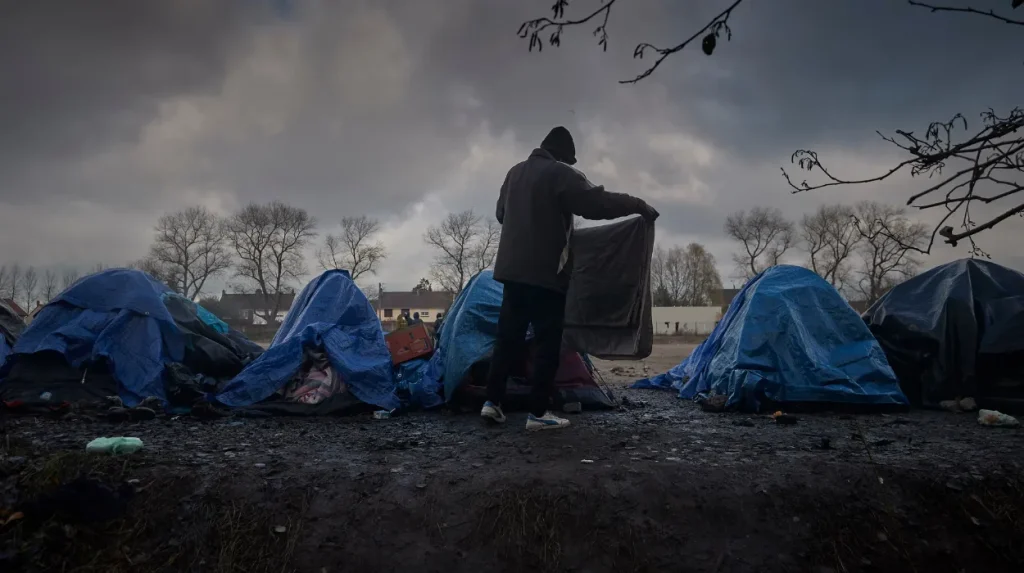
Returnees have reported that they were received unequally when they arrived in France. Some of the people characterized short-term homelessness around Calais, where they said there was little access to organized housing. The French government has resorted to regular clearups of the camps, under the reason of security and hygiene.
This may place migrants in awkward positions. Some of the returnees who do not receive assistance through formal reintegration state that they are susceptible to smuggling networks that enable further crossing.
Patterns Of Recrossing
Late 2025 interviews have indicated that the incentive to make another attempt of crossing has not been eradicated by the awareness of the pilot. The payments to the smuggling networks tend to remain even after being removed earlier.
This dynamic is supported by the bigger picture. In 2025, the UK had the largest number of small boat arrivals since 2022 with 41,472. On a proportional basis, 281 returns represent less than one percent of overall arrivals, and this creates concerns on the magnitude of the deterrence necessary to make a substantial impact.
Comparative Policy Landscape
The bilateral arrangement is much different than the previous Rwanda relocation policy which had been challenged on legal and logistical grounds. The existing pilot focuses on mutual give and take with a neighboring state as opposed to offshore processing.
Downing Street has described the model as more operationally based and faster. The returns realized in months are higher than what had been previously experienced in the course of the annual average returns under post-Brexit arrangements that did not have formal EU returns agreements.
Historical Benchmarks
Prior to the UK exiting the Dublin system of the European Union, the annual transfers to the EU countries might have been over 130 cases. Such numbers will decrease significantly after 2020. The pilot is thus a partial recovery in the collaboration across borders but on a smaller and more politically important level.
Removals of non-asylum in categories have reportedly increased at 28 percent per year in 2025 indicating possible expansion of enforcement pressure on non-Channel routes.
French Administrative And Political Constraints
The French officials have quoted resource pressure and reception capacity constraints as the limiting ones in the frequency of flights. The cooperation of police at the borders, asylum services, as well as local municipalities is still complicated.
Imbalance suggested in 281 Returns, 350 Intakes, also has an impact on domestic perceptions. French authorities have indicated that a balance should be maintained in the long run, especially in case of higher returns in 2026.
Bilateral Diplomatic Sensitivities
Although both governments are putting the scheme forward as a collaborative effort, there are sometimes tensions of timing and proportionality. The fact that the UK received more people than it gave back might help to reduce the friction between the two countries in the short term, but long-term asymmetry might alter negotiations.
Simultaneously, the scheme exists in a wider European migration context whereby there is an increasing trend in asylum seekers and financial limitations.
Deterrence And Sustainability Metrics
Deterrence depends not only on removal numbers but also on perceived inevitability. If prospective migrants believe return is likely and swift, incentives to cross may decline. Current figures, however, suggest that the removal probability remains statistically limited relative to arrival volumes.
Migration analysts note that for deterrence to meaningfully influence flows, operational capacity would need substantial expansion. Regular, predictable flights and improved French reception structures would be central to that effort.
Scaling Prospects For 2026
UK officials have indicated willingness to increase weekly returns if logistical hurdles ease. The pilot’s continuation beyond its initial phase may hinge on demonstrating measurable reductions in crossings or sustained political support in both capitals.
French cooperation remains indispensable. Without synchronized administrative expansion, scaling may prove constrained despite political intent.
Broader Migration Pressures
Global displacement trends continue to influence Channel crossings. Conflicts in Afghanistan, instability in parts of the Middle East, and economic hardship across several regions sustain migration demand. High-grant nationalities feature prominently among both arrivals and intakes.
Domestic pressures also shape policy evaluation. Asylum accommodation costs, including hotel placements, have become politically salient in the UK. Accelerated processing aims to reduce backlogs, but removal capacity remains finite.
The 281 Returns, 350 Intakes balance illustrates a policy attempting to reconcile deterrence with legal access. Its asymmetry does not necessarily signal failure, yet it complicates claims of immediate flow reduction. Whether expanded coordination can convert incremental operational gains into systemic impact will depend on political durability, administrative refinement, and the adaptability of smuggling networks operating along the Channel’s shifting currents.