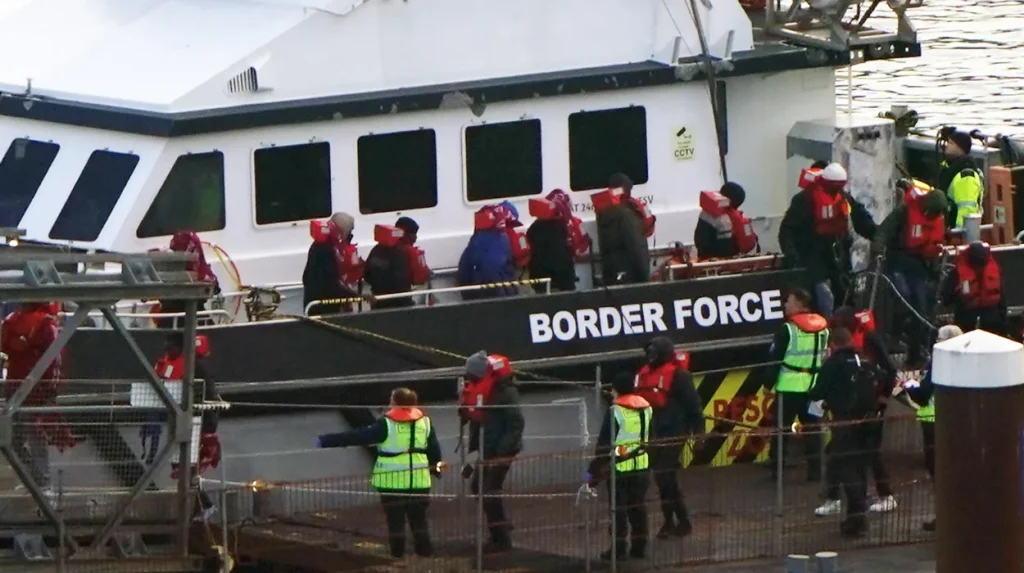
The United Nations has put out a firm warning for both the United Kingdom and France regarding their controversial ‘one in, one out’ asylum deal that threatens to violate serious international human rights laws.
The policy, which aims to combat irregular migration through Channel crossings by returning asylum-seekers from the UK back to France, has attracted sharp criticism from human rights experts, refugee campaigners, and global judicial authorities.
Nine UN human rights experts, including seven special rapporteurs, wrote a 20-page letter detailing several concerns to Downing Street and the French government and demanding a response within 60 days on 8 December 2025. It was made public on Friday and has increased international pressure on the policy.
UN Experts Document Alleged Abuse and Detention Practices
The experts cited a series of case studies of asylum seekers from Sudan, Gaza, Eritrea, Yemen, and Iran, most of whom are victims of torture, human trafficking, or conflict.
They cautioned that holding up victims of torture for forced removal could itself constitute cruel, inhuman, or degrading treatment, which is in contravention of international treaties such as the United Nations Convention Against Torture and the European Convention on Human Rights. The letter also brought up issues of protection failures for those who were suicidal, pointing to systemic weaknesses in the safeguarding of such vulnerable people.
Graphic Allegations of Mistreatment During Removal Procedures
A number of case studies are included in the UN letter describing violent and degrading treatment at the hands of authorities. One asylum seeker, from Eritrea, reportedly had a hood placed on his head, was denied shoes, and was forced to the ground with guards placing their boots on his neck.
A Yemeni woman, claiming she has been in slavery since early childhood, has allegedly been dismissed by the UK authorities since she did not inform them of her ordeal of being trafficked from the onset of her arrival.
Another example concerned a Gazan whose family was killed by Israeli shelling and later joined a group of relatives who were shot by smugglers. The survivors allegedly threatened with death if they informed authorities about the crime and returned to France, underscoring the threat posed by criminal smuggling networks.
Concerns Over Arbitrary Selection and Lack of Transparency
The experts also expressed concerns about the lack of transparency and apparent randomness in determining who is detained and sent back to France, versus those eligible to apply for asylum in the UK. The experts wanted assurances regarding unpublished operational details, such as selection criteria for returnees from France, procedural protections afforded to returnees, and oversight for the new policy—pointing to ambiguity in fairness, due process, and non-discrimination.
Risk of Refoulement and Chain Deportations
One of the major legal issues emphasized in the letter, which has been identified as a matter of concern, is the risk of onward refoulement, which is defined as the illegal practice of sending refugees back to countries where they risk persecution and harm. The experts have cautioned against the deportation of asylum seekers back to France, which may lead to further deportation and sending them to unsafe countries, violating the Refugee Convention and other international measures and laws.
Calls to End the Agreement and Reform Migration Governance
The UN experts urged the UK government to terminate the agreement and ensure that migration governance respects human rights rather than creating new vulnerabilities.
They emphasized that policies must protect children, torture survivors, trafficking victims, and other vulnerable populations rather than exposing them to further harm.
Human Rights Advocates Echo UN Alarm
Ms. Bella Mosselmans, a director with the Global Strategic Litigation Council specializing in refugee rights, filed her support behind the call to end this program by the UN.
“Asylum seekers already complained of fear, abuse of detention, and trauma. Documentation by the UN conclusively shows credible risks of torture, threats to life, and denial of due process.”
She also indicated that dozens of children, despite being excluded from the policy, have already been impacted, and those children are mostly trafficking survivors. Mosselmans described the continued implementation of the scheme as “indefensible.”
UK and UNHCR Responses
A UK Home Office spokesperson defended the policy, stating that the government is confident in the legal basis of the pilot scheme and insists it complies with domestic and international law.
Meanwhile, the UN High Commissioner for Refugees (UNHCR) confirmed ongoing dialogue with both governments, noting that concerns and observations are being shared directly with authorities for review and corrective action.
A Test Case for Europe’s Migration Ethics
The UK–France asylum deal represents a broader European trend toward externalizing border control and deterrence-based migration policies. Critics argue that such strategies risk undermining decades of international refugee protection frameworks and could set dangerous precedents for other countries.
If the allegations outlined by the UN are substantiated, the scheme could face legal challenges in international courts and further damage the credibility of European human rights commitments.