France has raised concerns about perceived fractures in NATO’s unity in light of recent actions and statements by US President Donald Trump. French Foreign Minister Jean-Noël Barrot cautioned that the alliance is “being tested by the choices made and declared yesterday by President Trump,” as worries intensify in Europe regarding Washington’s enduring commitment to transatlantic security.
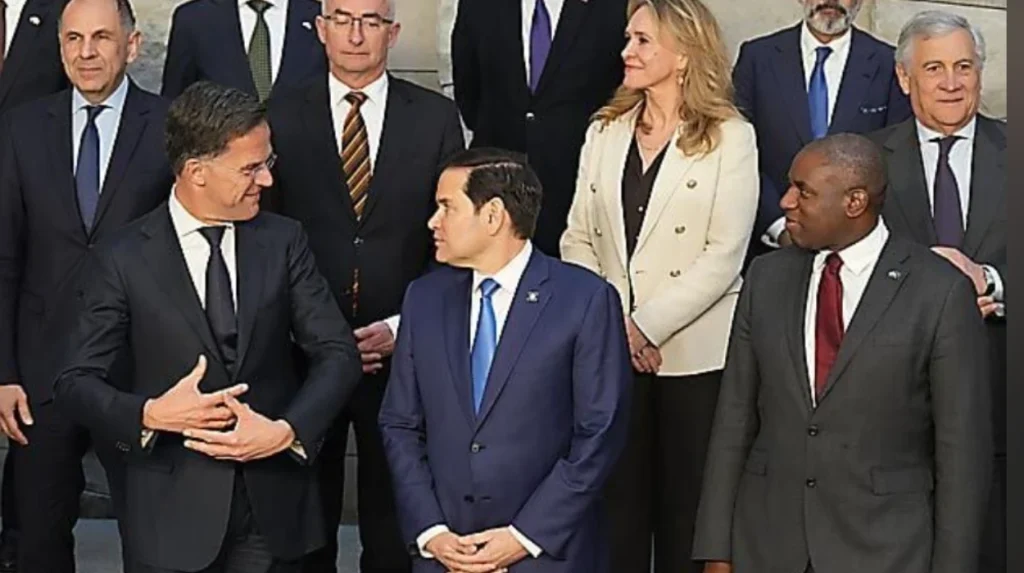
US Secretary of State Marco Rubio and newly appointed US Ambassador to NATO Matt Whitaker arrived in Brussels to ease concerns during a gathering of NATO foreign ministers. European officials are eager for clarity about the Trump administration’s plans, especially concerning the future of US troop deployments in Europe.
NATO is ‘stronger’ under Trump
Despite widespread concern from European capitals and Canada, Rubio maintained an optimistic perspective, downplaying what he referred to as “hysteria and hyperbole” from the media regarding the US’s role in NATO. While speaking with NATO Secretary-General Mark Rutte, he stated, “The United States is as involved in NATO as it has always been. “
“President Trump has made clear he supports NATO,” Rubio told reporters. “We’re going to remain in NATO. We want it to be stronger and more visible, and that means our partners the member states, must continue to build their capabilities”. A similar sentiment was expressed by Ambassador Whitaker, who said: “Under President Trump’s leadership, NATO will be stronger and more effective than ever before”. However, he also stressed that the alliance’s vitality depends on all members “doing their fair share”.
Europe wary of US threats
Nonetheless, numerous allies express skepticism, especially considering Trump’s friendlier tone towards Russian President Vladimir Putin, his critiques of NATO partners such as Canada and Denmark, and a fresh wave of global tariffs that might affect essential allies. The atmosphere in Europe is cautious, as many nations believe a substantial US withdrawal could be imminent.
This meeting occurred as Rubio spoke with Danish Foreign Affairs Minister Lars Løkke Rasmussen during the event, but neither of them addressed questions regarding Greenland – a sensitive topic following Trump’s earlier suggestion to buy the semi-autonomous Danish territory.
NATO Secretary-General Rutte, responsible for unifying the alliance, minimized concerns about an abrupt US withdrawal. He stated, “These issues aren’t new. There are no plans for a sudden reduction of US forces here in Europe. “
‘Strategies for shifting burdens’
Despite the façade, uncertainties remain. Trump’s recent foreign policy changes – especially his pivot towards Asia and heightened emphasis on U.S. borders – are causing European NATO members to rush to address possible security voids.
Tensions have escalated in Washington. Senator Roger Wicker, a Republican from Mississippi and the chair of the Senate Armed Services Committee, has openly criticized “mid-level” Pentagon officials for reportedly advocating an uncoordinated strategy to “dramatically cut” US troop presence in Europe – a claim that remains unverified by the US Defence Department.
At the same time, European nations and Canada are speeding up their “burden shifting” strategies to assume greater responsibility, ensuring that NATO’s deterrence remains credible despite possible US withdrawal.
Dutch Foreign Minister Caspar Veldkamp articulated the common European perspective, saying: “The US anticipates that its European allies will assume greater responsibility for their own security. Consequently, European NATO nations need to promptly enhance NATO’s European pillar and boost defense spending. “