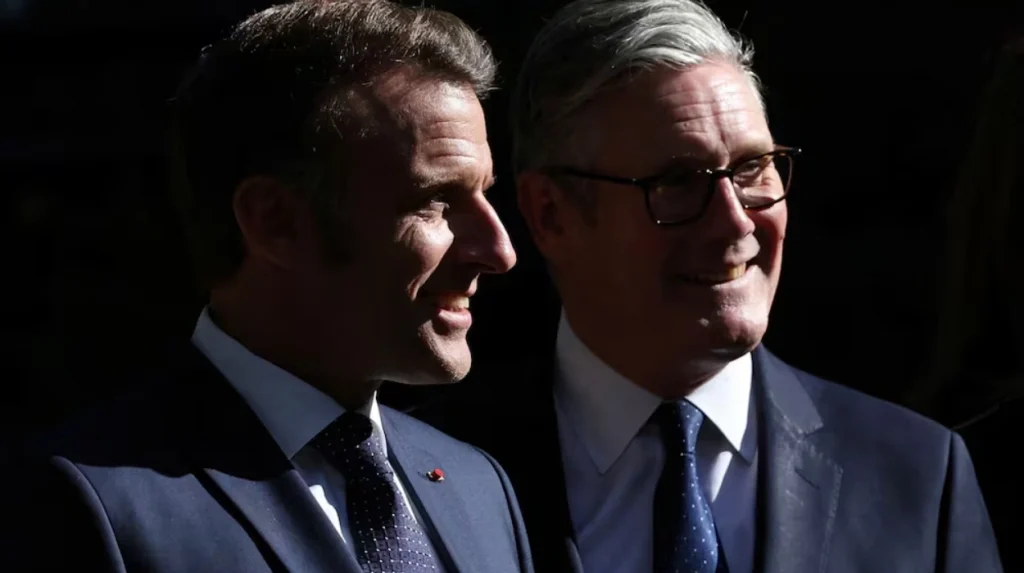
The July 2025 appearance of the French President Emmanuel Macron in the UK was a show that was marked by pageantry and timing and an ambitious theme; the UK and France needed to be the drivers of a new Europe in the era of geopolitical instability and social fragmentation. The visit is the first of its multi-state type ever by an EU chief since Brexit, a diplomatic accord of reconciliation and recovery. Macron has called for “shared leadership” in an apparent bid to rekindle European unity at a time when the post-war European system is in jeopardy due to migratory waves, defense budget deficits, and waning faith in transatlantic alliances.
The rhetoric of Macron, stated in speeches, conversations in small groups, and in co-speeches with the British Prime Minister Keir Starmer, was that Europe could not afford waiting any longer on the American leadership nor could it quell structural crises by mere symbolism of unity. It is not only a matter of political will but also a matter of institutional speed in both capitals as to whether this Anglo-French reset can be not only enduring but also successful.
The Symbolism Of A Renewed Alliance
Royal Pageantry And Political Purpose
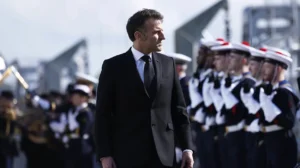
The approach of Macron to Windsor was made bright with the accent on decency and the conventions. The king and the queen invited some major political players and members of the royal family to enjoy an exquisite feast at Windsor castle. And in his speech King Charles III underlined precisely this togetherness in response to such global but varied menaces as he declared when he noted that no state is able to safeguard its future on its own. It was the call to shared responsibility, but one that was presented in the context of increasing isolationist appeal on the continent.
The ritual was a contrast to several years of post-Brexit tensions, trying to indicate that, at the current stage, realism was the new priority over historical resentments. The appearance of Prince William helped to reinforce the point: this was a strategic, rather than ceremonial visit, as well as that of Prime Minister Starmer.
Mending The Post-Brexit Rift
The UK and France have never really enjoyed a smooth relationship at the European level. Brexit has widened that chasm and this visit by Macron indicates a change. In the case of both leaders, realignment is not the result of nostalgia but a matter of necessity. Britain seeks relevance beyond the Commonwealth and transatlantic defense links, while France wants a reliable European partner not bound by Brussels.
Trade, defense, and migration are no longer side issues but pillars of survival. Both Macron and Starmer are under pressure to deliver in the face of growing domestic populism and international mistrust of international institutions. The task now is operationalizing this goodwill into consistent cooperation.
Migration: The Channel Crisis As A Test Case
Record Crossings And Political Pressure
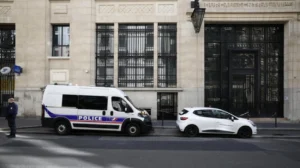
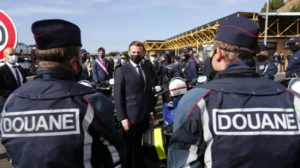
The rise in irregular migration over the English Channel is the most obvious issue in UK-France relations. By the middle of 2025, more than 20,000 migrants arrived by small vessels last year, which exceeded 2024 by almost 50 percent. This increase has led to nationalist retaliations in both nations with far-right groups taking advantage of the situation to cast doubts on whether governments are capable of handling the crisis.
Starmer’s proposed “one in, one out” scheme—where migrants landing in the UK would be returned to France in exchange for approved asylum seekers with British family ties—remains under negotiation. Macron has not publicly endorsed the policy, preferring a more humanitarian framing. Both leaders promise to “modernize” the border regime, but legal and logistical barriers remain steep.
Humanitarian And Security Dimensions
The political theatre belies a deeper challenge: how to address human suffering without incentivizing smuggling or losing public trust. Macron has emphasized “firmness and solidarity,” echoing EU migration doctrine while trying to reassure French citizens that France is not becoming a funnel into Britain.
Rights groups have challenged police tactics: destroying inflatable boats and deploying more patrols were among them. However, these actions are the manifestations of such entrapment of the two countries between deterrence and right to due process, where migrants and asylum seekers are being deprived of due process since they are the collateral of the conflicting policies and the labyrinthine bureaucracies.
Security And Defense: Filling The Transatlantic Gap
A New European Security Architecture?
Russia’s continued aggression in Ukraine and a weakened NATO posture under the second Trump administration have created a vacuum in Europe’s defense strategy. Macron and Starmer both argue that Europe must assume more responsibility. Their discussions included a proposal for a joint European rapid-response force—an idea once dismissed but now revisited with urgency.
The UK and France, the continent’s sole nuclear-armed countries and largest military funders, are uniquely positioned to lead such a force. Macron’s insistence that Europe “must end its dependency on the US and China” is part critique, part roadmap, signaling that future security arrangements must be indigenous, flexible, and technologically advanced.
The Ukraine Commitment
Macron and Starmer confirmed their common policy of Ukrainian support, promising to provide further military support and training, equipment, and intelligence exchange. More operation integration is implied by plans to conduct joint visits to defense facilities in Poland and Romania. Both leaders underlined the point that Europe owes its credibility on whether it will be able to keep the Ukrainians fighting not only with words but also with supplies.
The weaponization of natural gas and the issue of energy security were discussed, as well, and the two governments settled the matter of increasing nuclear cooperation and guarding its infrastructure.
Economic And Cultural Ties: Beyond Politics
Trade And Investment
Macron noted that bilateral trade has returned to pre-Brexit levels, even amid regulatory divergence. France’s EDF recently committed to a 12.5% stake in the UK’s new Sizewell C nuclear facility, while British tech firms are seeking expansion in Lyon and Marseille. Macron described this as “proof that political borders cannot contain economic necessity.”
New agreements on financial regulation and carbon trading are in development, reflecting attempts to create post-Brexit frameworks that remain interoperable. Macron has publicly endorsed Starmer’s plan for limited regulatory convergence without rejoining the single market.
Cultural Diplomacy
A surprise announcement was Macron’s agreement to loan the Bayeux Tapestry to the British Museum in 2026, a move framed as both a historical nod and cultural bridge. In his address to Parliament, Macron joked that the tapestry “took longer to arrive than Brexit negotiations,” drawing laughter and applause.
Joint initiatives in education, film, and museum exchanges were announced, including a proposed “Youth Bridge” program offering language scholarships and exchange placements for students aged 14 to 18.
The Limits And Risks Of Leadership
Divergent Interests And Political Realities
Despite optimistic declarations, policy divergence remains stark. Both Macron and Starmer have to consider the EU as well as national matters on the subject of migration, with Macron having to show the ability to enforce controls without resorting to offshore processing or infringing on rights conventions, and Starmer having to demonstrate his capacity to control borders without unlawfully deporting people.
Aspirations of forming a European defense system are met by the Eastern European countries who are yet to get over the dependency on NATO and its French-led attempts. The fact is that the creation of an operational capacity and trust outside the American umbrella is a process, not a summit diplomacy, that takes decades.
The Role Of Symbolism
Symbolism matters in diplomacy—but it cannot substitute for infrastructure, budgets, and legal reform. The royal ceremonies, historic gifts, and media showcases create an aura of momentum, but the effectiveness of this new “UK-France axis” will hinge on tangible policy outcomes and consistent follow-through.
Public patience may not extend far into 2026 without visible improvements on migration management, security coordination, and economic resilience. The challenge is not intent—it is execution.
Voices From The Debate
Andy Gibson, admitting the symbolism, doubted whether the alliance would hold up. He asked:
“What happens when the cameras leave and public scrutiny fades?”
Gibson emphasized the risk of diplomacy-as-performance, noting that
“Europe’s future will not be secured by ceremonies alone.”
His remark betrays the common distrust of the ability of elite level pronouncements to keep ahead of bureaucratic momentum and cross-purposes in the demands of the people.
"MACRON: WE MUST SHOULDER BURDEN OF KEEPING EUROPE SAFE"
— Andy Gibson (@AndyGibsonTV) July 8, 2025
Full Story: https://t.co/EyrV6idHlh@DavidPBMaddox for @Independent #EmmanuelMacron urged #Britain and #France "to shoulder the burden of European security" together.#TheIndependent#TomorrowsPapersToday#IBPAPERS pic.twitter.com/FauK30RsH4
Can Two Nations Save A Continent?
Macron’s state visit and bold rhetoric have revived talk of an Anglo-French engine for Europe—a partnership of pragmatism, military might, and historical weight. But reviving influence is not the same as exercising it. Both governments face entrenched skepticism, institutional fatigue, and public mistrust.
If the UK and France can bridge their post-Brexit wounds and move beyond symbolic affirmations, they might reforge a model for cooperative sovereignty—a model Europe sorely needs. But without coordinated follow-through, their alliance risks becoming another chapter in the long history of European declarations unfulfilled. The choices made in the months to come could determine whether this rare moment of alignment yields enduring stability or quickly fades into pageantry and forgotten potential.