In 2025, French far-right Rassemblement National (RN) positioned itself on the issue of cryptocurrency differently than it had a few years earlier, as it took the side of state-sponsored Bitcoin mining, unlike its previous idea of a total ban. The shift has been symptomatic of a broader reorientation of how the party evolves in terms of its national sovereignty/ digital infrastructure/ energy strategy.
In 2016, Marine Le Pen requested a complete prohibition of cryptocurrencies, claiming that they weakened national financial authority and could be used to interfere in a country by foreign financial interests. The party associated digital assets with financial turbulence and its elite control, and warned that the crypto technologies would sever citizens with the actual economic power and accelerate the crisis of the cash.
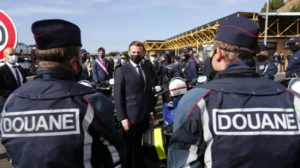
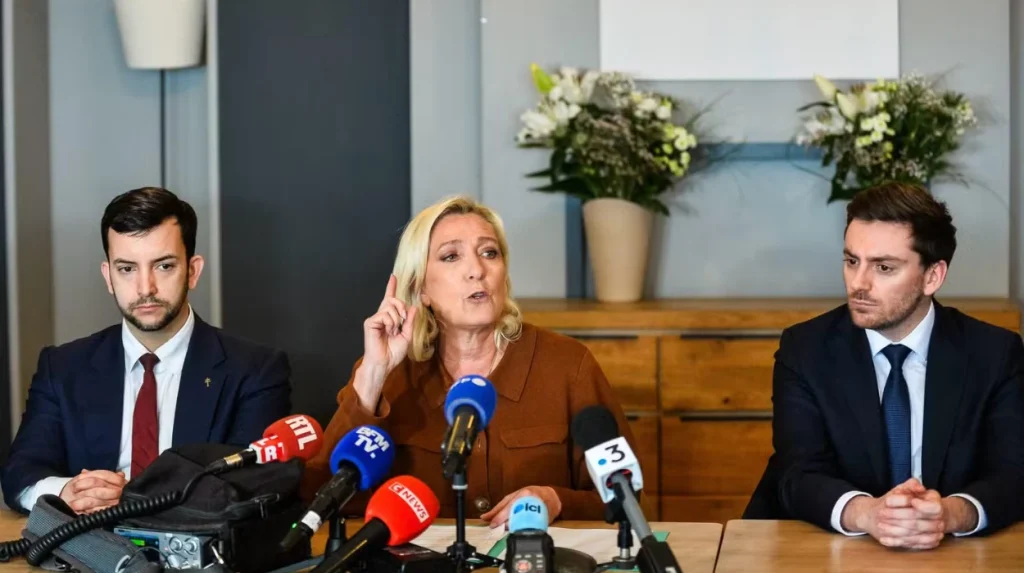
Yet less than a decade later, RN has reversed course. On March 11, 2025, Le Pen visited the Flamanville nuclear plant in Normandy and publicly endorsed a policy to mine Bitcoin using France’s nuclear energy surplus. The initiative proposes installing mining infrastructure at Électricité de France (EDF) facilities to convert excess energy into Bitcoin—a move described as both “strategically sovereign” and “economically rational.” RN lawmaker Aurélien Lopez-Liguori is leading the legislative push, with proposed bills already circulating through parliamentary channels.
Intraparty debate and political reaction
The policy shift has not been unanimously welcomed within RN. Jean-Philippe Tanguy, a prominent voice on financial policy, continues to question the decentralized ethos of cryptocurrencies, arguing they contradict RN’s preference for centralized monetary oversight. Nonetheless, the internal strife notwithstanding, RN today is the most progressive party in France in regard to the state integration associated with blockchain usage, as well as the marketing of crypto as a means of economic independence.
Left and center opposition critics have expressed their doubts due to the environment and whether Bitcoin serves the greater good of people. Environmental organizations have cautioned that a setup of industrial crypto-mining through nuclear—let alone other forms of industrial crypto-mining coming to the forefront– creates a precedent of enabling high-energy-consumption models under the backdrop of a global climate emergency.
Nuclear energy as the infrastructure for blockchain ambition
The core of RN’s proposal is its plan to fuse France’s dominant nuclear energy capacity with blockchain economics. This coupling repositions unused energy capacity as an untapped economic asset rather than a systemic inefficiency.
France’s energy profile and strategic leverage
The nuclear fleet of France produces around 338,000 gigawatt-hours per year, which makes up more than half of the overall power in the country. Nuclear plants are inclined to generate excess amounts of energy at times of low-demand, such as during the overnight hours or on weekends or during seasonal l there can be a decline in energy demand. This excess energy cannot be easily stored or sold at a viable market price.
The RN strategy identifies these intervals as prime opportunities for high-intensity Bitcoin mining. By redirecting idle electricity to proof-of-work computations, the plan promises to monetize energy that would otherwise be lost. EDF, a state-owned utility, would operate the infrastructure, ensuring state control over both energy usage and asset generation.
Financial potential and tech-forward positioning
Initial projections from RN officials suggest annual revenues between $100 million and $150 million, based on mining outputs from pilot deployments. The proposal positions France to become a leading nation in carbon-neutral crypto production—an area increasingly scrutinized by regulators and financiers for environmental compliance.
Supporters argue that such a model could transform France’s digital economy footprint, especially in rural or economically depressed areas where EDF facilities could host mining rigs, create jobs, and stimulate local infrastructure development. RN’s broader ambition includes linking blockchain projects to public services such as digital identity and smart contracts, extending beyond financial speculation into institutional applications.
Strategic narratives and their socio-political resonance
The RN’s reversal on crypto is not only economic but deeply political. It reflects a broader effort to redefine sovereignty for the digital era—shifting from fear of technological disruption to leveraging it for national advantage.
Sovereignty narratives in digital finance
RN now casts Bitcoin as a form of “sovereign digital gold,” one that removes dependency on transnational banks and economic alliances. In speeches and interviews, Le Pen has framed the mining initiative as a defense of economic independence against financial globalism, portraying decentralized finance not as a threat but as a frontier of nationalist innovation.
This reframing resonates with a segment of RN’s electorate that is skeptical of centralized European Union policies and foreign financial influence. By aligning Bitcoin with French energy, French labor, and French technological capacity, RN builds a national identity narrative around digital autonomy.
European context and potential ripple effects
France’s initiative could spark wider interest across EU member states with excess renewable or nuclear capacity. Countries like Sweden and Finland, already exploring crypto regulation, may consider integrating surplus energy use into digital asset policies. RN’s bold move could reshape the European political framing of blockchain—from libertarian and private to state-owned and strategic.
However, the proposal also invites scrutiny from EU regulatory bodies. France is bound by European climate and energy commitments, and expanding high-load digital infrastructure may conflict with broader decarbonization goals unless tightly controlled. Brussels is also likely to assess whether such state-sponsored crypto ventures distort energy markets or compete unfairly in cross-border digital finance.
Technology, energy markets, and governance uncertainties
As with any ambitious policy convergence, France’s proposal faces uncertainties—technical, financial, and regulatory. Implementing Bitcoin mining at scale requires more than political will; it demands realignment across energy grids, financial supervision, and public-private coordination.
Infrastructure feasibility and market dynamics
Adapting EDF’s plants for Bitcoin mining involves reconfiguring transmission systems, managing cooling requirements, and ensuring computational hardware supply chains. The volatility of Bitcoin prices also introduces financial risk, especially for state-led projects that may be subject to public backlash if profitability declines.
Energy market dynamics may further complicate deployment. New demand from mining rigs could clash with industrial or residential needs during unexpected consumption spikes. Grid balancing will require smarter forecasting and real-time management—capabilities EDF has begun developing but not yet validated at such scale.
Legal and environmental considerations
While RN emphasizes nuclear’s carbon-free credentials, the proposal does not bypass all environmental critique. Life-cycle emissions from hardware production, e-waste from short-lived mining equipment, and the sheer scale of energy use remain areas of concern. Regulatory agencies will have to address not only direct emissions but secondary effects as well.
Moreover, if EDF begins to function as both energy supplier and asset miner, conflicts of interest may arise. Questions around fair market access, consumer pricing, and transparency in state-backed digital asset accumulation could prompt legal challenges both within France and under EU law.
Political discourse and public engagement
The proposal has sparked vibrant debate in French media and policy circles. For RN, the move offers an opportunity to present itself as forward-thinking and techno-nationalist. For opponents, it exemplifies policy opportunism and ecological irresponsibility.
This person has spoken on the topic and summarized the situation accordingly: Blockchain analyst Vivek noted that RN’s shift “illustrates how political narratives on digital assets shift rapidly when framed within sovereignty and economic resilience.” He cautioned that while the policy may seem innovative, its success depends on clear regulatory oversight and long-term governance mechanisms to prevent misuse or systemic imbalance.
🇫🇷 FRENCH PARLIAMENT JUST INTRODUCED A BILL TO MINE #BITCOIN WITH SURPLUS ENERGY
— Vivek Sen (@Vivek4real_) July 17, 2025
HERE WE GO!!! pic.twitter.com/ta80FuaN8T
As things stand, the project is still at the parliamentary stage, and pilot projects are still being technically evaluated at EDF-controlled sites. The Ministry for the Energy Transition did not automatically support or reject the plan and this is an indication that the policy is being taken with caution and considerations are also made outside the legislature.
The RN’s crypto turnaround marks a telling chapter in the interplay of energy, technology, and ideology in France. The lines between nationalism and innovation keep getting blurred as financial tools and energy markets undergo digitalization. But regardless of whether the proposal can become a part of France digital policy or a political experiment with not-so-widespread impact, it represents a larger trend that happens world-wide: the technology, a once-feared phenomenon, now has become a sphere in which legitimacy, influence, and strategic control are waged.