France has the potential to play a key role in achieving autonomy for Europe’s defense sector. Still, experts warn that the country has to overcome some issues and must work together instead of separately.
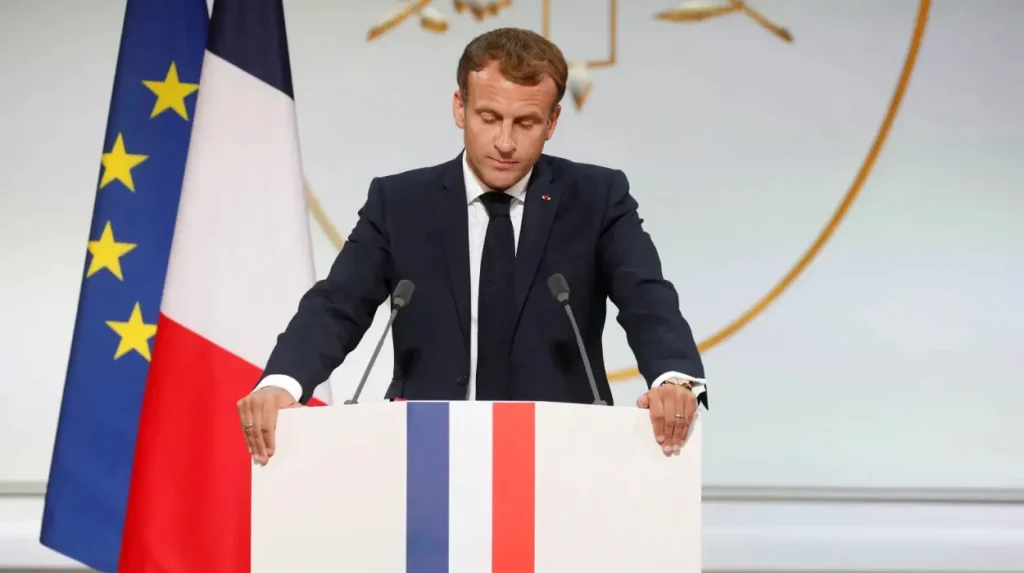
French President Emmanuel Macron had already made the case for “strategic autonomy” in 2017. “When it comes to defense, our objective must be that Europe should have the ability to act autonomously, in parallel with NATO,” he stated in a Europe address at Sorbonne University in Paris. In the European Union at the time, his call went on deaf ears, particularly those of then-German Chancellor Angela Merkel.
Rising to face new global realities
Eight years later, the mentality has shifted. Russia has been attacking Ukraine for three years now. More recently, Donald Trump was re-elected for a second term as US president. He is determined that his country should no longer serve as the guarantor of Europe’s security. The EU has responded to the new geopolitical landscape by declaring it aims to invest €800 billion ($882 billion) in defense by 2030 under a program called ReArm Europe. A number of EU countries will increase their individual defense budgets, such as Spain, Italy, and France.
France’s defense spending of about €50 billion — some 2% of French gross domestic product (GDP) — is planned to double by 2030. Economists estimate it might boost France’s economic growth by up to 1.5%.
The country’s 20,000 defense companies, employing about 200,000 people, form the backbone of the continent’s defense industry. France has players in all sectors of the field. These capabilities have been maintained since the 1960s, unlike some other nations.
Paris cut spending after the Cold War ended in the 1990s, but the terrorist attacks on the World Trade Center in New York and the ensuing war on terror reversed that shift.
France continues to embody a ‘war culture’
France has become a Systems-of-Systems (SoS) capability leader, where individual systems collaborate to pursue a common mission through their combined strength.
For instance, advanced products such as the French Rafale military jets or the Charles de Gaulle aircraft carrier. At the same time, Paris cut back on the production of light weapons and ammunition. Paris thought that it would be simple to restart production because such products are simpler in nature. However, there are difficulties in restarting or scaling up military production.
France will need massive amounts of raw materials. They are hard to come by, particularly given that sanctions have been placed on Russia. Moscow is a major supplier of significant minerals, following its invasion of Ukraine.
France is struggling with high public debt and needs to sharply cut its deficit, which is likely to exceed 5% this year. Therefore, the government has said it will launch a defense mutual fund via the public investment bank Bpifrance. Other financial products are also being considered to attract savings from French citizens.
Should the French practice greater modesty?
Paris-based Kayrros recently secured its first set of defense agreements. The startup uses artificial intelligence to analyze changes in satellite imagery, which could soon include troop movements.
France will play a key role through its expertise in space technology, as it has a mini Silicon Valley and numerous prestigious research institutions in that field. However, all of that doesn’t mean France should go it alone, experts seem to agree.
Experts are adamant that Paris must find the right approach. It should not assume France will be the new global defense leader, replacing the US, as developing a strong European defense sector is all about collaboration with other countries like Germany or Italy.