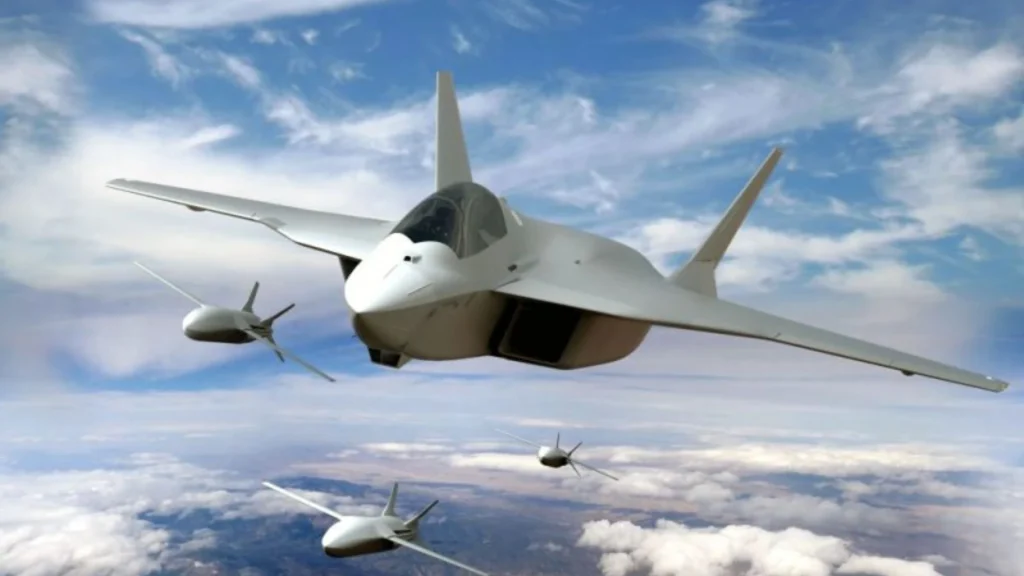
The Future Combat Air System (FCAS) has been one of the most risky military programs in decades in Europe. The sixth-generation fighter jet was initially conceived as a three-nation partnership between France, Germany, and Spain and was meant to be a pillar of European strategic independence. But even by halfway in 2025, the projects could be torn apart by then due to rivalries behind the leadership and industrial dominance.
France’s push to secure up to 80% control over key FCAS components raises foundational concerns about trust, cooperation, and long-term viability. The question now is whether Europe’s political unity can match its military ambition.
Unraveling Balance: A Cooperative Project Tilting Toward Control
The Original Vision and Its Rapid Erosion
FCAS was announced with promises of equal partnership. France’s Dassault, Germany’s Airbus, and Spain’s Indra were to share responsibilities in developing the Next Generation Fighter (NGF), alongside advanced engines, sensors, and combat cloud architecture. This model was not just about technological parity—it was political insurance against dominance by any single state.
But this balance has shifted. Dassault, backed by French defense authorities, now insists on full control over the NGF design, the engine roadmap, and central avionics—areas that collectively define 80% of the program’s strategic value. The rationale is that one leader must drive the program forward. But for Germany and Spain, this approach undercuts their political, financial, and technological stake.
Rising Tensions and Potential Withdrawal
Germany and Spain have described France’s push as unilateral and incompatible with the 2022 parity framework signed by all three nations. Berlin, which contributes a significant portion of the funding, argues that diminishing its technical role breaks the trust that enabled the project in the first place. Spanish officials have warned that FCAS is “at real risk of collapse,” especially if Madrid’s defense industry becomes marginalized in favor of French primes.
There is precedent for such fragmentation. France famously left the Eurofighter Typhoon program in the 1980s, launching its own Rafale project to preserve autonomy. With FCAS, the pattern appears to be repeating—only now, the strategic stakes are even higher.
The Technical and Strategic Rationale Behind France’s Position
Speed, Sovereignty, and Delivery Pressure
French officials argue that leadership is not about dominance but delivery. FCAS is already running behind schedule and the risk is that delays would render the platform irrelevant before it enters service. The target year—2045—could slip further without decisive governance. Dassault has highlighted unresolved issues in intellectual property, software integration, and system architecture that they claim are best managed by a single lead entity.
For France, this is also about ensuring that the program reflects national defense doctrine. Its air force prioritizes expeditionary capabilities and nuclear deterrence—requirements that are more rigid than Germany’s or Spain’s. By leading the platform design, France believes it can safeguard national interests within a shared framework.
The Dangers of Overconcentration
However, the opponents say that excessive concentration dilutes the European spirit of integration. The decision to deprive partner countries of the main tasks exposes France to the risk of transforming FCAS into a national project that is funded multilaterally, which is unlikely to pass the test in Berlin or Madrid parliament. Furthermore, a centralized model can augment internal inefficiencies when other partners become uncommitted or drop the program as a priority.
Lack of substantive workshare sees Germany and Spain experiencing staged political outcry within their domestic political environment coupled with the eventual exit of industrial potential in the long run.
The erosion of trust could also impact future cooperation in drones, tanks, and satellite systems—areas where trilateral initiatives are already being discussed.
Europe’s Broader Defense Ecosystem and FCAS’s Fragile Center
Strategic Necessity vs. National Ambition
The rationale for FCAS as a shared European project remains sound. The United States continues to dominate sixth-generation fighter development, while Asia accelerates through Japan, China, and South Korea. Europe risks being technologically sidelined without joint capability. A single, unified platform would enable interoperability, shared R&D costs, and strategic cohesion across the EU’s fragmented defense landscape.
Yet defense procurement is rarely driven by logic alone. National interests dominate, as countries use procurement to sustain domestic industry and employment. A French-led FCAS—without adequate compensation—may push Germany and Spain to either withdraw or align with rival programs, such as the UK-Japan-Italy Global Combat Air Programme (GCAP).
Timeline Pressure and Cross-Platform Risk
FCAS already lags behind GCAP, which is on track for a 2035 prototype and firm development milestones in 2025. The risk is that FCAS becomes a shadow project—perpetually delayed and unable to compete for exports, even within Europe. Airbus has signaled that unless clarity emerges before Q4 2025, component development and prototyping will face critical slippage.
Meanwhile, interoperability risks loom large. A fighter platform built without genuine integration of European partners may fail to meet NATO standards or EU joint force ambitions. Political failure in FCAS could also stall broader EU defense mechanisms such as the Permanent Structured Cooperation (PESCO) or the European Defence Fund.
Industry Reactions and Policy Backlash
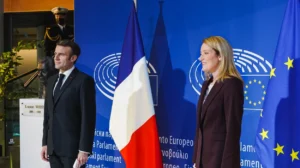
This person has spoken on the FCAS controversy in an interview with CNBC, warning that
“the project now risks becoming the next Eurofighter Typhoon story—split by bickering just when Europe needs a united front in technology and production. Until binding frameworks and shared leadership are secured, European defense will struggle to deliver on its full promise.”
#MExplains 🎥 | 🇩🇪 As Berlin expands its stealth jet fleet to 50, tensions soar over the faltering Franco-German FCAS fighter project. Is Europe's defense unity cracking?@ShivaniSinghRna breaks it down!#Germany #France #F35 #NATO #DefenseNews #Military #FCAS #LockheedMartin… pic.twitter.com/bhz69NN9fA
— Moneycontrol (@moneycontrolcom) July 14, 2025
Industry insiders echo these concerns. Defense analysts from Jane’s Defence Weekly note that supplier networks in Germany and Spain are already adjusting procurement projections downward, anticipating exclusion from FCAS core modules. Some are exploring future contracts with GCAP partners or independent drone programs, preparing for a post-FCAS landscape.
A Precedent in the Making for EU Defense Policy
What FCAS Means for Future Collaboration
The collapse or unilateralization of FCAS would send a message far beyond fighter jets. It would indicate that even among the EU’s largest economies, the political framework for collaborative defense innovation is too weak to handle high-stakes programs. It would discourage future risk-sharing in strategic domains like AI defense, electronic warfare, and missile defense.
Moreover, the reputational cost could be significant. If FCAS unravels, Europe may find itself increasingly reliant on American or Asian systems—not by choice, but by necessity. This dependency would undercut stated ambitions of European strategic autonomy, long championed by France itself.
Bridging the Gap: The Last Opportunity for Real Compromise
The FCAS partners still have time—though not much—to find common ground. A revised workshare agreement that respects core French concerns while restoring meaningful roles for German and Spanish industries could preserve the project’s integrity. Mechanisms like rotating leadership, joint R&D centers, and clear export benefit-sharing might help rebuild confidence.
What is lacking is not technical capability, but political vision. Without it, the most ambitious fighter project in Europe’s history could become another cautionary tale of ambition outpacing cohesion.
As 2025 enters its final quarter, FCAS stands not only as a litmus test for Europe’s defense future but as a measure of its collective will. Will it choose unity through compromise, or division through dominance? The answer may shape the continent’s strategic landscape for generations.